


What behaviour is considered impolite in Norway?
Share
Save
In brief
In Norway, being considerate often means respecting other people's time, personal space and peace. Avoid pushing into conversations, cutting queues or assuming the rules in somebody else's home. Take litter away when you leave a natural area and be mindful of noise. Tipping is voluntary. A quiet or reserved response is not automatically a sign of dislike. Take your cue from the situation and the individual. Sources: NHH, Visit Norway and DNT, checked 25 October 2026.
| Situation | Practical response | Basis |
|---|---|---|
| A stranger gives a brief answer | Do not insist on continuing the conversation | NHH, interpretation of distance politeness |
| A personal question | Ask if the subject is comfortable to discuss | Editorial advice |
| Waiting in line | Find the queue or take a ticket where required | Editorial advice |
| Entering a private home | Ask about shoes at the door | Discover Norway, a customary practice |
| Tipping | Decide for yourself after checking the bill | Visit Norway |
| Enjoying nature | Take litter with you and lower your music volume | DNT |
Sources checked 25 October 2026. These examples distinguish customs, advice and rules.

Is staying quiet or reserved considered rude in Norway?
Researcher Kristin Rygg offers an interpretation of certain reserved behaviours as respect for another person's independence. This is research on how politeness can be understood, not a claim about the personality of every Norwegian. NHH discusses this as distance politeness, checked 25 October 2026. Start with a specific, brief question and notice whether the person wants to continue.
If somebody returns to their book or answers in just a few words, it is fine to end the interaction. See the separate guide to personal space in Norway.
Tip
When asking for help, try “Excuse me, could you help me with something?” followed by a clear question. A short answer may be all the help you need. This is practical guidance, not a fixed Norwegian formula.
Which personal questions should you avoid at first?
Allow a new acquaintance to decide how much personal information to share. Questions about debts, illness or family conflicts may feel intrusive in many countries. EURAXESS describes an informal communication style in Norway, but this is not an invitation to ask strangers anything you like. Source: Norwegian culture & language, checked 25 October 2026.
Example
Instead of asking somebody you have just met about their salary, ask whether they enjoy their job. If you need financial information ahead of a move, explain your purpose and ask about general living costs rather than their personal income. This is an editorial example, not a ban on discussing salaries.
Is it rude to laugh loudly or show emotion?
Laughter, excitement and everyday conversation are not inherently rude or forbidden. The practical question is whether your volume disturbs others in a shared space. NHH's discussion of not disturbing strangers should not be turned into a rule against emotions. Checked 25 October 2026.
Common mistake
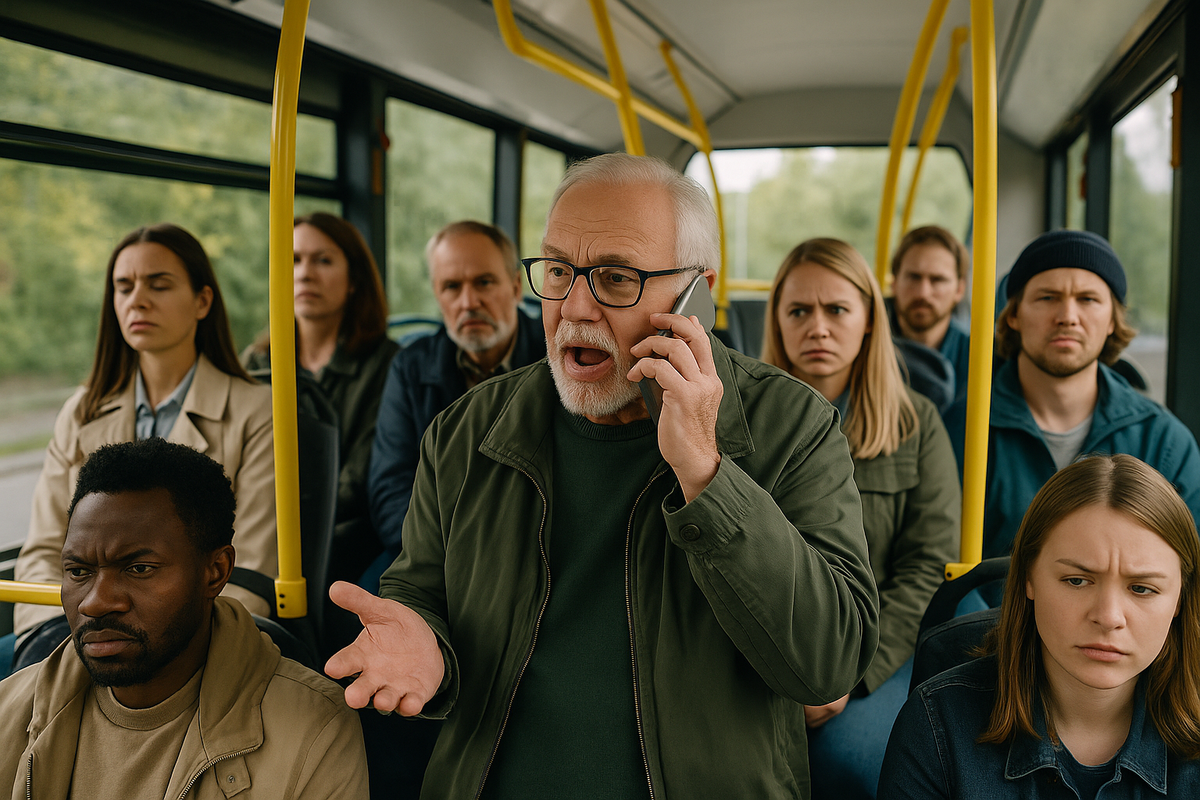
Assuming that a quiet setting means nobody may speak. A quick phone answer may be fine, but take a long call elsewhere if it disturbs fellow passengers. Observe clearly designated quiet zones where they exist.
How should you queue in Norway?
Look for a ticket dispenser, an established line or instructions from staff before approaching a counter. When the order is unclear, ask “Who's last?” or “Should I take a number?” Empty space at a service counter does not mean no one is waiting. These are useful precautions, not a regulation about standing a fixed distance apart.
Keep luggage out of walkways and let people exit before entering. Read the separate guide to queuing in Norway.
Are politics, religion and identity taboo topics?
Do not create a list of forbidden topics based on another person's nationality. Ask whether they want to discuss the subject and do not demand private disclosures. EURAXESS highlights equality and respect rather than a universal ban on debating social issues. Checked 25 October 2026.
Practical editorial advice: distinguish public discussion of politics from intrusive questioning about a person's private beliefs or identity. Do not infer someone's orientation, gender or background from appearance. If corrected or asked to change the subject, accept the request without argument.

What is polite when visiting a Norwegian home?
Removing outdoor shoes in a private home is a common custom described by Discover Norway, checked 25 October 2026. It is not a nationwide law requiring everyone to remove their shoes in all buildings. Pause at the entrance and ask your host. See the guide to shoes in Norwegian homes.
Steps
- Confirm when you are expected.
- Let your host know if you are running late.
- Ask whether you should bring anything.
- Ask about footwear when you arrive.
- Thank your host for inviting you.
This is a practical sequence, not a mandatory national ritual.
If you cannot remove your shoes for a personal reason, explain beforehand and offer a clean alternative. Do not walk straight through without checking.
Is not tipping or splitting the bill rude?
Tipping in Norway is voluntary. Visit Norway does not prescribe one compulsory percentage. There is no need to add 10–15% simply to satisfy an invented national etiquette rule. Source: Currency and prices, checked 25 October 2026.
Before ordering, agree how to share the cost if that matters, and check the final bill. Splitting the bill and tipping are separate decisions. See the guide to currency and payments in Norway. Do not assume a local payment app is available to every visitor.
How can you respect nature and other visitors?
DNT advises taking your litter away, avoiding damage to plants, respecting animals and being considerate of the privacy and quiet of people living nearby. Pick up food wrappers, make way for others on paths and avoid loud music. Checked 25 October 2026.
Norway's right to roam does not remove the need to check the specific conditions for camping. See the guide to camping and allemannsretten.
Checklist
Before leaving a picnic or rest spot, collect all packaging and food scraps, check that you have your belongings and leave the path clear for other people. This is a practical last check.
Important
If somebody says your behaviour is disturbing them, ask what the issue is and change what you can. Apologise briefly and offer a practical solution. This is advice for handling misunderstandings, not a guarantee of anyone's reaction.
Frequently asked questions
No. You can ask a specific question, but allow the other person to end the conversation. Source: NHH, Norwegians impolite? Forget it!, checked 25 October 2026.
No universal distance in metres is established by this guide. Follow the situation and the other person's response. Source: Kristin Rygg, Impoliteness according to whom?, checked 25 October 2026.
Not automatically. Ask if the topic interests the other person, and do not demand personal disclosures. Editorial advice, 25 October 2026.
No. Match your volume to the surroundings and follow any designated quiet-zone rules. Practical advice informed by NHH, checked 25 October 2026.
It is customary in many private homes, but ask the host. It is not a universal law. Source: Discover Norway, Facts about Norway, checked 25 October 2026.
No. Tips are voluntary and there is no compulsory fixed rate. Source: Visit Norway, Currency and prices, checked 25 October 2026.
Look for a ticket machine or ask the people waiting or a member of staff. Practical editorial advice, 25 October 2026.
Ask what was wrong, apologise briefly and try to correct the action. Practical editorial advice, 25 October 2026.
Share
Save

Read also

What common social misunderstandings should tourists avoid in Norway?
Find out what social misunderstandings and cultural differences may affect your interactions with locals in Norway and how to avoid them.

How to give and receive gifts in Norway: customs and expectations
Find out what gifts are considered appropriate in Norway, whether there are any special rules for giving and receiving gifts, and how to behave appropriately i…

How does Janteloven influence how Norwegians celebrate achievements and successes?
Discover how the Janteloven principle influences how Norwegians celebrate their successes and achievements, and why modesty is important when celebrating in No…

Do Norwegians eat with their hands? Table manners in Norway
Knife and fork or hands, when dinner is served, what to say after the meal and whether to tip: the table manners a visitor to Norway needs, with sources.

What does gender equality mean in Norway?
Equal rights in law and in numbers: the pay gap of 2025, 15 weeks of leave reserved for each parent, the 40 per cent board rule and where to complain.

Punctuality in Norway: the importance of time in culture
Learn how important punctuality is in Norway, why being late can be perceived as rude, and how to meet time expectations in various social and business context…
1 comment
Log in to leave a comment