

Oslo
Oslo at a glance
Oslo is the capital, a municipality and a county. It has been the capital since 1814, and the name has changed over time: Christiania from 1624, Kristiania 1877–1897, and Oslo again from 1 January 1925. About two thirds of the municipal area is forest and open country (Store norske leksikon).
- Population (municipality): 728,714 (2026)
- Area: 426 km²
- Highest point: Kjerkeberget, 631 m above sea level
- Time zone: CET (UTC +1, summer time CEST UTC +2)
- Currency: Norwegian krone (NOK)
What to see
- The Vigeland Park in Frogner Park: 214 sculptures with more than 600 figures. The Monolith is 17 metres tall and has 121 figures (Store norske leksikon).
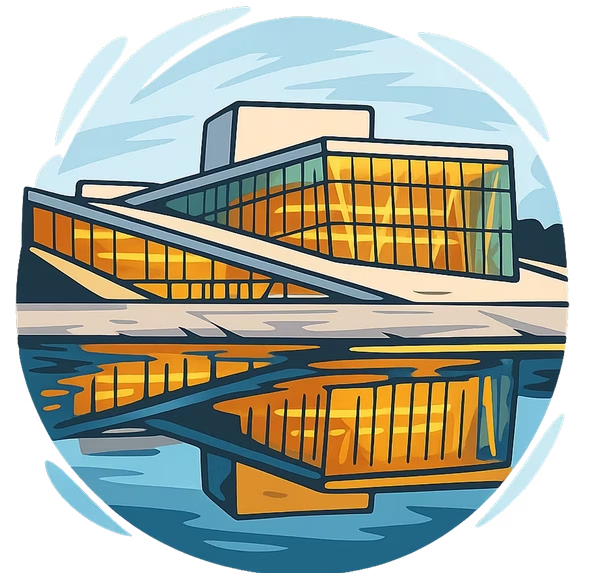
- The Opera House in Bjørvika: opened in 2008, designed by Snøhetta, 38,500 m² and around 1,100 rooms, with 1,350 seats in the main hall. The exterior is clad in Carrara marble (Store norske leksikon).
- Holmenkollen ski jump: the present structure dates from 2010, hill size 134 metres and K-point 120 metres. The stands hold about 20,000 spectators, and the start house sits some 65 metres above the slope, with a café and a viewing platform (Store norske leksikon).
How to get around
- Public transport: Ruter. A single ticket for zone 1 costs NOK 46 for adults and is valid for 60 minutes; a 24-hour ticket costs NOK 137 and a 7-day ticket NOK 379 (Ruter, prices from 1 August 2026).
- From Oslo Airport: Vy local trains are valid with a Ruter ticket for the zones to the airport and with the Oslo Pass. Flytoget has its own tickets (Ruter, Visit Oslo).
- Oslo Pass: NOK 580 for 24 hours, NOK 845 for 48 hours and NOK 995 for 72 hours for adults. It gives free public transport in zones 1–4 and entry to over 30 museums and attractions (Visit Oslo).
More about tickets and zones: public transport in Oslo.
Businesses and places in Oslo
Number of listings in the directory, checked 27.09.2026:
Sources: Store norske leksikon, Ruter, Visit Oslo. City facts checked 27.09.2026, prices checked 26.09.2026.
Last checked 27.09.2026 by Redaksjonen NorgeGuide.
Where to eat


Entertainment and leisure


Education and clubs


Andre organisasjoner og tjenester i Oslo


All categories in Oslo
- Adult stores
- Advertising and promotional products
- Aesthetic clinics and plastic surgery
- Airlines and air transport
- Amusement parks and activity centres
- Antique shops
- Apartments and residential complexes
- Art galleries
- Art schools
- Asian restaurants and sushi bars
- Astrology and esoteric services
- Audio and video equipment rental
- Bakeries
- Banks
- Barbershops
- Bars and lounges
- Bathroom and plumbing stores
- Beauty and perfume stores
- Beauty courses
- Beauty salons
- Bike and scooter rental
- Bike shops
- Billiard halls
- Bookstores
- Bridal shops
- Building and industrial suppliers
- Building services and installation
- Building supply stores
- Bus stops and bus terminals
- Cafés
- Car dealers
- Car markets and auto auctions
- Car parts and accessories stores
- Car rental companies
- Car repair shops
- Car wash and detailing services
- Care homes and assisted living
- Casinos and gaming
- Catering services
- Charities and foundations
- Children's clothing and baby stores
- Churches and places of worship
- Cleaning companies
- Clothing and textile suppliers
- Clothing stores
- Clubs and associations
- Coffee shops
- Commercial buildings and office parks
- Companies
- Concert halls and live music venues
- Construction and engineering firms
- Construction equipment rental
- Consulting firms
- Cooking classes
- Courier and postal services
- Creative groups
- Dance schools
- Debt collection agencies
- Dentists
- Driving schools
- Dry cleaners and laundries
- Education centres
- Electronics and tech stores
- Embassies and consulates
- Energy companies
- Environmental organisations
- Equipment and machinery suppliers
- Event and banquet venues
- Event and entertainment agencies
- Eye clinics
- Fabric and yarn stores
- Fast food and takeaways
- Ferries and boat transport
- Financial and accounting firms
- Florists and garden centres
- Food and beverage suppliers
- Food and grocery delivery
- Freight and transport companies
- Funeral homes and cemeteries
- Furniture and home stores
- Furniture and interior suppliers
- Garden design and maintenance
- Gift and souvenir shops
- Government agencies
- Grocery stores and supermarkets
- Guesthouses, cabins and campsites
- Gyms and fitness centres
- Hair removal clinics
- Hair salons
- Holding companies
- Hospitals
- Hostels
- Hotels
- Insurance companies
- Interior design and renovation
- Internet cafés
- Investment and brokerage firms
- IT services
- Jewellery and accessory stores
- Kindergartens
- Kitchen and tableware stores
- Landmarks and historic sites
- Language courses
- Law firms and legal services
- Libraries
- Lingerie and underwear stores
- Logistics and warehousing
- Manufacturers
- Marketing agencies
- Markets and bazaars
- Maternity wards and fertility clinics
- Media and design studios
- Medical centres and clinics
- Medical equipment suppliers
- Medical laboratories
- Microfinance institutions
- Motorcycle and scooter shops
- Museums
- Music schools
- Nail salons
- Nightclubs
- Norwegian restaurants
- Notary offices
- Office, art and hobby stores
- Oil, gas and fuel companies
- Online stores
- Opticians
- Paediatricians
- Parking facilities
- Parks and recreation areas
- Patisseries and cake shops
- Pawnshops
- Pet care and veterinarians
- Pet shops
- Petrol and EV charging stations
- Pharmacies
- Pizzerias
- Print and copy shops
- Property developers
- Property valuers
- Psychologists
- Public toilets
- Pubs and beer gardens
- Real estate agents
- Recruitment agencies
- Rehabilitation and wellness centres
- Research institutes and laboratories
- Restaurants
- Road maintenance and services
- Saunas and baths
- Schools
- Seafood restaurants
- Second-hand stores
- Security companies
- Shoe stores
- Shopping centres
- Site preparation and demolition
- Spas and massage centers
- Sports and outdoor equipment rental
- Sports and outdoor stores
- Sports clubs
- Swimming pools
- Tailors and sewing workshops
- Tattoo and piercing studios
- Taxi services
- Telecom and internet providers
- Theatres and cinemas
- Tobacco and vape shops
- Towing and roadside assistance
- Toy stores
- Train and metro stations
- Translation agencies
- Travel agencies and tour operators
- Universities and colleges
- Waste and recycling services
- Water utilities
- Wine and liquor stores
- Workshops and manufacturing
- Workwear and medical clothing stores
Frequently asked questions about Oslo
Vy local trains are valid with a Ruter ticket for the zones to the airport and with the Oslo Pass. Flytoget is a separate express train with its own tickets (Ruter and Visit Oslo, checked 26.09.2026).
NOK 46 for adults in zone 1, valid for 60 minutes. Bought on board it costs NOK 66 (Ruter, prices from 1 August 2026, checked 26.09.2026).
The Oslo Pass costs NOK 580 for 24 hours, NOK 845 for 48 hours and NOK 995 for 72 hours for adults, and gives free public transport in zones 1–4 and entry to over 30 museums. If you only need transport, a Ruter ticket is cheaper (Visit Oslo, checked 26.09.2026).
214 sculptures with more than 600 figures. The Monolith is 17 metres tall and has 121 figures (Store norske leksikon, checked 27.09.2026).
The Opera House in Bjørvika opened in 2008, was designed by Snøhetta, measures 38,500 m² and has 1,350 seats in the main hall (Store norske leksikon, checked 27.09.2026).
The hill size is 134 metres and the K-point 120 metres. The present structure dates from 2010, and the stands hold about 20,000 spectators (Store norske leksikon, checked 27.09.2026).
728,714 inhabitants in the municipality in 2026. The area is 426 km², and about two thirds is forest and open country (Store norske leksikon, checked 27.09.2026).