
Add organization

Stavanger at a glance

Stavanger lies in Rogaland county on the south-west coast. The town was granted full trading rights in 1425, and since the 1960s it has been the centre of the Norwegian oil industry (Store norske leksikon).

  • Population (municipality): 150,000 (2026)
  • Land area (municipality): 256 km²
  • County: Rogaland
  • Time zone: CET (UTC +1, summer time CEST UTC +2)
  • Currency: Norwegian krone (NOK)

What to see

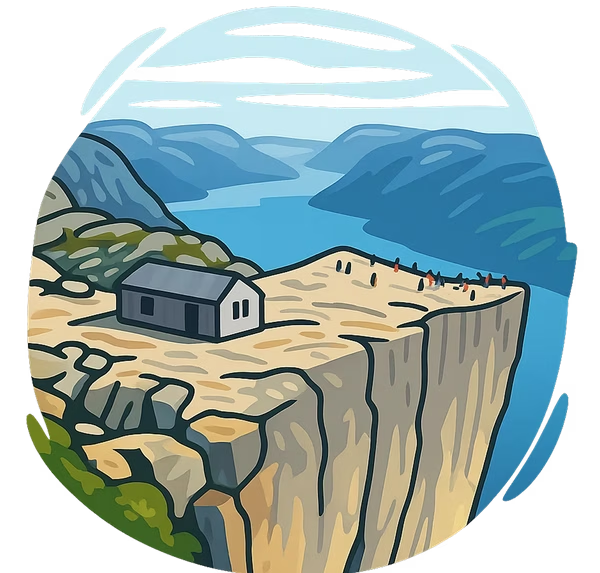
  • Preikestolen (Pulpit Rock): the plateau sits 604 metres above the Lysefjord and measures about 25 × 25 metres. The hike from Preikestolen fjellstue is just over four kilometres each way, and since 2020 it has been a national hiking trail (Store norske leksikon).
  • Old Stavanger: close to 170 small, white-painted, protected wooden houses and cobbled streets (Store norske leksikon).
  • Sverd i fjell (Swords in Rock): three bronze swords at Møllebukta in Hafrsfjord, made by Fritz Røed and unveiled in 1983, commemorating the battle of Hafrsfjord in the late 800s (Store norske leksikon).
  • Norwegian Petroleum Museum: Kjeringholmen 1A. Adults NOK 180, children aged 4–16 NOK 60, family ticket NOK 420. Open 1 June–31 August daily 10–19, and 1 September–31 May Monday–Saturday 10–16 and Sunday 10–18 (Norsk Oljemuseum).
  • Stavanger Cathedral: construction began in 1125 (Store norske leksikon).

How to get here

  • By air: Stavanger Airport Sola. The airport bus takes about 20–30 minutes to the centre, and Kolumbus bus route 42 runs between the airport, Sola, Forus and Stavanger (Avinor).
  • Bus, train and boat in the region: Kolumbus. A single ticket costs NOK 49 for adults and NOK 25 for children, students and seniors, valid for 60 minutes in the zone where you buy it, plus 30 minutes for each additional zone. Buying on board costs more (Kolumbus).
  • Longer stays: 24-hour ticket from NOK 133, 7-day ticket from NOK 354 and 30-day ticket from NOK 550 (Kolumbus).

Businesses and places in Stavanger

Number of listings in the directory, checked 27.09.2026:

Nature parks and recreational areas430
Public transport stops and bus terminals315
Grocery stores and supermarkets171
Parking facilities112
Restaurants105
Landmarks and historic sites87
Fuel and charging stations83
Bars and lounges49
Tourism and travel companies41
Hotels and resorts39
Bakeries35
Cafés and canteens32
Art galleries and exhibition centres31
Hospitals30
Pharmacies22
Museums20
Guesthouses, cabins and campsites13
Gift and souvenir shops10
Car rental7
Public toilets6
Dry cleaning and laundry5

Sources: Store norske leksikon, Avinor, Kolumbus, Norsk Oljemuseum. All facts checked 27.09.2026.

Last checked 27.09.2026 by Redaksjonen NorgeGuide.
Popular places to visit in Stavanger

Other organizations and services in Stavanger

All categories in Stavanger

Frequently asked questions about Stavanger

The airport bus takes about 20–30 minutes to the centre. Kolumbus bus route 42 also runs between the airport, Sola, Forus and Stavanger (Avinor, checked 27.09.2026).

A single ticket costs NOK 49 for adults and NOK 25 for children, students and seniors. It is valid for 60 minutes in the zone where you buy it, plus 30 minutes for each additional zone; buying on board costs more (Kolumbus, checked 27.09.2026).

The plateau sits 604 metres above the Lysefjord and measures about 25 × 25 metres. The hike from Preikestolen fjellstue is just over four kilometres each way, and since 2020 it has been a national hiking trail (Store norske leksikon, checked 27.09.2026).

A wooden-house quarter with close to 170 small, white-painted, protected houses and cobbled streets (Store norske leksikon, checked 27.09.2026).

Adults NOK 180, children aged 4–16 NOK 60 and a family ticket NOK 420. Open 1 June–31 August daily 10–19, and 1 September–31 May Monday–Saturday 10–16 and Sunday 10–18. Address Kjeringholmen 1A (Norsk Oljemuseum, checked 27.09.2026).

Three bronze swords at Møllebukta in Hafrsfjord, made by Fritz Røed and unveiled in 1983, commemorating the battle of Hafrsfjord in the late 800s (Store norske leksikon, checked 27.09.2026).

Construction began in 1125. The town was granted full trading rights in 1425 (Store norske leksikon, checked 27.09.2026).