



How do Julenissen and the farm nisse differ at Christmas?
In brief: Julenissen brings Christmas gifts, while the fjøsnisse, or farm nisse, looks after the farm in folk belief and receives treats himself. The figures have converged, so a red cap alone does not identify the character. Norsk Folkemuseum distinguishes their origins and roles: when exploring Norwegian Christmas, the story tells you more than the costume (checked 3 November 2026).
How do Julenissen and the farm nisse differ?
| Comparison | Fjøsnissen | Julenissen |
|---|---|---|
| Main role | Farm guardian in folk belief | Christmas gift-bringer |
| Who receives a treat or gift? | Treats are left for him | People receive gifts |
| Story | The farm, animals and relations with the household | Christmas gift-giving |
| Origins | Folk beliefs about a farm spirit | The Saint Nicholas tradition and later images of Santa Claus |
| Clothing | Associated with farming clothes from different periods | Illustrations have changed the festive figure |
| How to distinguish them | By their role in the story | By their role in the story |
Comparison based on Norsk Folkemuseum, checked 3 November 2026. This helps interpret depictions; it is not a strict classification of every modern figurine.
For a quick definition, see the short answer about the nisse. Here the focus is how different stories came together within one Christmas culture.
Why is porridge left for the farm guardian?
In the stories recounted by Maihaugen, the nisse protects animals and peace in the household but may cause harm if offended. A treat on Christmas Eve expresses the relationship with this helper: food is offered to preserve peace on the farm. This recounts a belief rather than asserting that the spirit exists (checked 3 November 2026).
Important
Historical belief, family play and a museum performance have different status. Describing an old custom does not mean every family follows it today.
Maihaugen also shows how the story is passed on today: its article includes a photograph of a museum employee leaving porridge during Christmas storytelling. This demonstrates museum practice, not the custom's prevalence across Norway (checked 3 November 2026).
Where did the Christmas gift-bringer come from?
Norsk Folkemuseum links the gift-bringer to the memory of Saint Nicholas's generosity and Nordic nisse beliefs. Different influences shaped the figure; explaining him merely as “the same farm nisse who one day started giving presents” is too simple (checked 3 November 2026).
These strands coexist in Norwegian Christmas imagery. One story explains food for the farm guardian; another concerns gifts to people. The broader context is covered in the general guide to Christmas in Norway.
How did Christmas cards change the nisse's image?
Norsk Folkemuseum shows a Christmas card featuring a nisse dated 25 December 1895. The museum links the spread of cards to mass colour printing and expanding postal connections; sending them became common in Norway around 1900 (checked 3 November 2026).
A card therefore matters as more than decoration: it shows the character becoming part of a shared Christmas language. The date of one card documents a particular object, not the year the nisse was “born”.
Example
If a museum label says “1895”, first establish what is dated: the card, the posting or the image. Do not use an object's date as the age of an entire belief.
Why does the nisse not always wear a red cap?
Colour changed for reasons beyond appearance. According to Norsk Folkemuseum, the red cap became a sign of solidarity and resistance during the German occupation. Following the 1942 ban on red pointed caps, some cards depicted nisser in yellow, blue and green headwear (checked 3 November 2026).
Such a detail may have historical meaning. Cap colour alone does not prove that this is a different character: also examine the caption, story and image date.
Did Coca-Cola invent Julenissen?
No. In its account of its own advertising, The Coca-Cola Company states that Haddon Sundblom began creating its Santa Claus images in 1931. The company also acknowledges earlier depictions of the red suit. Advertising influenced the gift-bringer's popular appearance but did not create the character and his predecessors from nothing (checked 3 November 2026).
Common mistake
Treating an advertising campaign's date as the beginning of an entire Christmas tradition. Influence on appearance and the character's origins are different questions.
How do you interpret a custom you encounter today?
VisitOSLO describes both porridge bowls for the nisse in rural areas and nisse figurines among Christmas decorations. These are different ways the character appears in today's celebrations: not every figurine expresses belief in a spirit, and one family's custom is not compulsory for its neighbours (checked 3 November 2026).
Tip
Ask your hosts what they call the figurine and whether it has a family story. One family's answer is more useful than assuming the whole country celebrates identically.
For historical interpretation, start with the museum label and the object's maker; choose where to explore using the overview of museums of culture and folk traditions. For practical trip planning, see the article on choosing a winter trip in Scandinavia and Finland. More short answers are collected in the questions about holidays and etiquette.
Which questions help explain the nisse figures?
In the farm-guardian story, the helper himself receives the treat. Maihaugen explains porridge as a way of maintaining good relations with him; this differs from giving presents to people (checked 3 November 2026).
The action and caption are more reliable clues. Norsk Folkemuseum shows how clothing varies in depictions; one colour does not strictly define the character (checked 3 November 2026).
They are different customs. VisitOSLO separately describes finding the almond for a prize at the shared table and leaving food for the farm nisse. They should not be merged into one compulsory ritual (checked 3 November 2026).
No. The dated object in the material from Norsk Folkemuseum documents a depiction from that time, not the belief's first appearance (checked 3 November 2026).
Norsk Folkemuseum links these depictions to the ban on red caps during the occupation. Changing colour could respond to the circumstances of the time (checked 3 November 2026).
According to the advertising history from The Coca-Cola Company, Haddon Sundblom began working on its campaign then. This is not the date the gift-bringer or red suit was invented (checked 3 November 2026).
No such universal rule appears in the description from VisitOSLO: it refers to many people in rural areas. That cannot establish the proportion of families nationwide or a compulsory custom (checked 3 November 2026).
It primarily shows the museum's interpretation of tradition. In the material from Maihaugen, an employee leaves porridge during historical storytelling; this cannot be applied to every modern home (checked 3 November 2026).
Which sources explain the nisse?
Norsk Folkemuseum: Graut- eller Cola-Nisse?. Anne Kristin Moe, former museum curator; differences between depictions and the gift-bringer's origins. Checked 3 November 2026.
Maihaugen: Jul og folketro på Maihaugen. Thea Haukaas Nilsen; the farm nisse and museum presentation of the custom. Checked 3 November 2026.
Norsk Folkemuseum: Nye juleskikker på 1800-tallet. Birte Sandvik and Morten Bing; cards, dating and the custom's spread. Checked 3 November 2026.
Norsk Folkemuseum: Forbud mot røde nisseluer under 2. verdenskrig. Sigrid Torjusson and Anja Hysvær Langgåt; history through the museum's own card collection. Checked 3 November 2026.
The Coca-Cola Company: Haddon Sundblom and the Coca-Cola Santas. The company's own advertising history, independently checked against the museum article. Checked 3 November 2026.
VisitOSLO: Norske juletradisjoner. Modern customs and decorations; a description, not statistics for all families. Checked 3 November 2026.
Norsk Folkemuseum: Merkedager i førjulstiden. The Nilsmesse section; the gift-bringer's link to Saint Nicholas and the figure's development. Checked 3 November 2026.
Author: Redaksjonen NorgeGuide. Updated 3 November 2026.
Read also
When is Advent in Norway in 2026, and what do its customs mean?
Find Norway’s Advent Sundays in 2026, how candles differ from daily calendars, pre-Christmas shopping hours and advice on safe lights and planning.
When are public holidays and school holidays in Norway?
Check Christmas, winter and autumn school holidays in Oslo and Bergen, how public holidays differ, and which school or childcare calendar to use.

How do you choose a winter trip to Scandinavia and Finland?
Compare winter and Christmas in Norway, Sweden, Denmark and Finland. Use the 2026/2027 calendar and check local times, transport and availability.
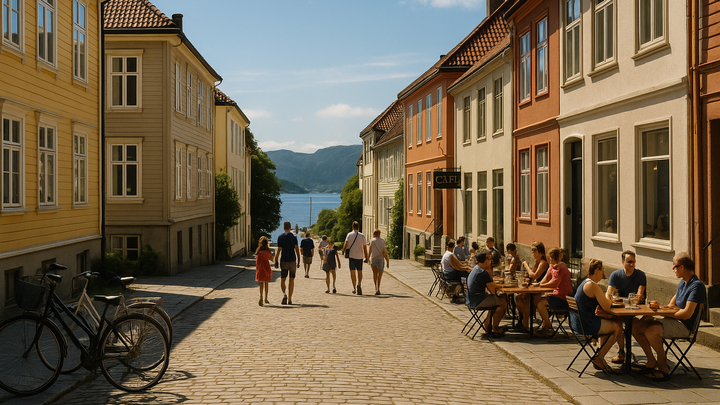
☀️ Fellesferie in Norwegian: how to live, work and travel in the "quiet" month of July 🌿
📌 Three weeks of Fellesferie: what's open in Norway, how to book tickets and accommodation, where to work quietly and where to go for 1-3 days from major citie…
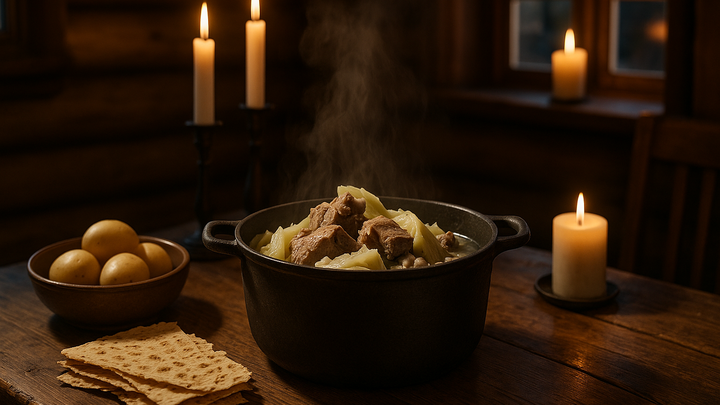
🍲 Fårikålens festdag: where to try the "real" fårikål and how to cook it in a hut after work 🏡
📌 Oslo and Trondheim: where to find authentic fårikål. A recipe for cooking it in your cabin, a shopping list, and ideas for a relaxed evening 🌟
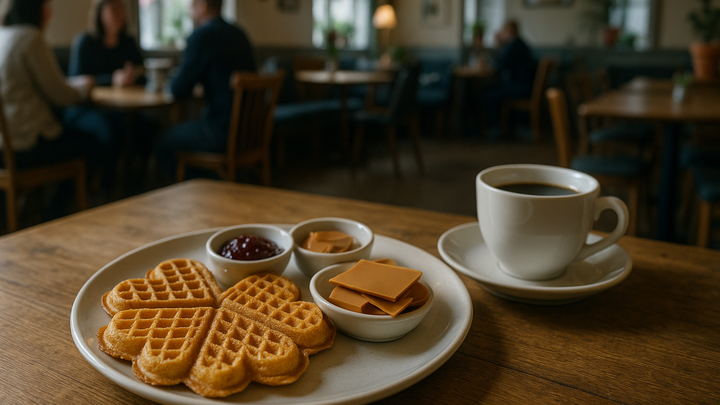
🧇 Vaffeldagen in Norway: where to eat, how to bake and spend a day "waffle style" 🎉
📌 Oslo, Bergen, Trondheim, Tromsø, Stavanger: waffle and "working" coffee shops, recipes (classic/lactose-free/gluten-free) and shopping lists — everything you…
0 comments
Log in to leave a comment