



How do you prepare for a winter hike beside a Norwegian fjord?
Share
Save
In brief: Begin winter fjord hiking by checking terrain, weather and return before darkness. DNT: mountain code and Varsom: avalanche terrain require attention to conditions and avalanche areas, including runout below slopes above the path (checked 27 October 2026). For a first trip, choose a straightforward confirmed route with experienced accompaniment; agree cruise and walk separately, with a backup plan.
How do you choose the type of winter fjord walk?
On a first visit, distinguish a gentle walk in a settlement from travelling on a snowy mountainside. A waterfront view does not require repeating a summer ascent to a high viewpoint.
DNT: planning your trip (checked 27 October 2026) advises matching the route to the whole group's abilities and preparing alternatives. Without experience assessing snow and terrain, choose organised accompaniment and state your experience beforehand.
For photography, see the separate article on winter waterfall photography routes; an appealing picture does not establish safe access.
Tip
Agree beforehand that the walk may be shortened or replaced by a waterfront programme. Conditions determine the day's goal, not an obligation to reach a viewpoint.
Why can a gentle path still be exposed to avalanches?
Varsom: avalanche terrain (checked 27 October 2026) distinguishes release areas from runout zones. Avalanches may start on slopes steeper than 30°, but a person on gentler ground below can also be in their path.
Look beyond the gradient under your feet to the connected mountainside above. A slope map assists planning but does not replace the ability to assess actual terrain and snow.
Varsom: avalanche danger scale (checked 27 October 2026) calls level 1 low danger, not zero risk. The forecast colour alone does not authorise every slope.
Do not step onto fjord or lake ice for a shortcut. A frozen appearance does not establish that it can support a person; DNT also requires recognising unsafe ice. DNT: mountain code (checked 27 October 2026).
Important
To avoid avalanche accidents, Varsom: avalanche terrain (checked 27 October 2026) recommends staying outside avalanche terrain, including runout zones. If you cannot identify that terrain, do not choose it for an independent outing.
What should you check before setting off and on site?
Example
A group initially plans a walk with an ascent. On site, they realise nobody can assess the slope above the path. They choose an accessible walk in a settlement instead. This illustrates a decision, not a verified route.
| Stage | Action | When to change the plan | Basis |
|---|---|---|---|
| Goal | Choose for the weakest group member | Experience or strength is insufficient for conditions | DNT: planning your trip (checked 27 October 2026) |
| Terrain | Check slopes above the path and runout | You cannot rule out avalanche terrain | Varsom: avalanche terrain (checked 27 October 2026) |
| Forecast | Read the warning for the area and date | Conditions do not fit the route | Varsom: avalanche warnings (checked 27 October 2026) |
| Daylight | Set turnaround and return times | The group moves more slowly than planned | DNT: mountain code (checked 27 October 2026). Practical application. |
| Transport | Confirm the return and a backup route | The walk relies on an impossible connection | DNT: planning your trip (checked 27 October 2026). Practical application. |
| On the route | Keep assessing weather and the group | Visibility, snow or wellbeing changes | DNT: mountain code (checked 27 October 2026) |
| Return | Tell the person who knows your plan you are back | If delayed, follow the agreed contact plan | DNT: mountain code (checked 27 October 2026) |
What equipment is needed for a winter outing?
DNT: winter-trip advice (checked 27 October 2026) collects winter planning and equipment advice. The kit depends on remoteness and route type; no single backpack weight is set for every outing.
The winter packing list helps with clothing, but establish the outing's nature first. A mountain route needs reserves for an unexpected delay, not just clothes for a photograph on a jetty.
Common mistake
Choosing snowshoes from a picture and treating every route as a stroll. Icy slopes, steep ground and avalanche terrain require different skills and decisions; change route when uncertain.
| Category | What to prepare | Limitation |
|---|---|---|
| Clothing | Warm layers, wind/rain protection, dry spares | Match conditions; no universal temperature range |
| Footwear and grip | Footwear and traction for the chosen surface | Snowshoes do not make an icy slope safe |
| Navigation | Map, compass and ability to use them | Do not rely only on a phone; DNT: winter packing list (checked 27 October 2026) |
| Light and food | Headtorch, spare power, food and drink | A short plan may take longer |
| Emergency reserves | Shelter, insulation and first aid for the outing | Agree kit and skills with an experienced companion |
| Avalanche preparation | A beginner's route outside avalanche terrain | Transceiver, probe and shovel do not replace training |
Can you combine a hike with a winter cruise?
Yes, if the walk and sailing are independently confirmed for your dates and there is enough time between them. Do not assume the boat will wait for a delayed hiker.
Use the winter Flåm–Gudvangen cruise timetable for the water section. Paying for a cruise does not mean a mountain walk is included or runs that day.
If you prefer a gentle boat trip instead, examine accessibility on fjord trips. Boarding and companions' needs still require assessment.
If driving to the start, separately check winter driving.
Which costs should you request before booking?
Collect written prices for the same dates and group. An independent outing, guided walk and “cruise plus walk” package have different inclusions.
This table is a cost checklist, not a tariff. Enter confirmed offers only and count each component once.
Tip
Include cancellation and replacement-walk conditions, not just the amount. There is no universal wind threshold cancelling every vessel or one insurance policy covering every winter outing.
| Cost item | How to compare | What to clarify |
|---|---|---|
| Travel to the start | Return total for everyone | Seasonal changes |
| Accompanied walk | Per-group or per-person price | Route, duration and change conditions |
| Equipment | Hire for the required period | What is provided and what to bring |
| Water section | Specific sailing price | Is the return bus included? |
| Meals and accommodation | Only required services | What is already included? |
| Total | Confirmed expenses | Same currency and party |
How do you make the final morning decision?
This preparation sequence is based on DNT: mountain code (checked 27 October 2026), not permission for a particular path. Reassess conditions after the walk starts too.
The absence of a published assessment for an area or date does not establish low danger. Varsom: avalanche warnings (checked 27 October 2026) marks a missing assessment separately. Without enough information, do not continue on an assumption of safety.
Pre-departure checklist
Understood terrain, current forecast, prepared group, suitable clothing, navigation, light, delay reserves, return route and someone who knows the plan.
- Open Varsom: avalanche warnings (checked 27 October 2026); select the area and bulletin validity period.
- Compare conditions with the entire route, approaches, slopes above and return.
- Confirm actual transport operation and route conditions with the organiser or an experienced local companion.
- Agree turnaround time, contact and backup plan; tell someone staying behind.
- Cancel or shorten the outing if conditions and skills do not match.
Frequently asked questions
A summer description alone is insufficient. DNT: planning your trip (checked 27 October 2026) requires current conditions and group ability to be considered; assess the winter route separately.
No. Varsom: avalanche terrain (checked 27 October 2026) also identifies runout from slopes above the route. Gentle ground alone does not remove danger.
No. Varsom: avalanche danger scale (checked 27 October 2026) defines level 1 as low, not zero danger. Terrain and conditions still matter.
No. DNT: mountain code (checked 27 October 2026) advises matching the route to experience and consulting experienced people. Accompaniment and a simpler option are wiser than an unfamiliar slope; accompaniment does not guarantee safety.
No. The choice depends on surface and terrain. DNT: winter-trip advice (checked 27 October 2026) distinguishes preparation and kit for different winter outings; exclude an unsuitable slope.
Appearance does not confirm safe ice. DNT: mountain code (checked 27 October 2026) requires recognising unsafe ice and choosing a safe route.
Reassess and turn back in time, retaining strength. Timely turnaround is part of DNT: mountain code (checked 27 October 2026).
No. DNT: mountain code (checked 27 October 2026) recommends map and compass; phones are not reliable in every area and condition. See also DNT: winter packing list (checked 27 October 2026).
Sources
- DNT: mountain code (checked 27 October 2026).
- DNT: planning your trip (checked 27 October 2026).
- Varsom: avalanche terrain (checked 27 October 2026).
- Varsom: avalanche danger scale (checked 27 October 2026).
- Varsom: avalanche warnings (checked 27 October 2026).
- DNT: winter-trip advice (checked 27 October 2026).
- DNT: winter packing list (checked 27 October 2026).
Author: Ksenia. Updated: 28 October 2026.
Share
Save

Read also
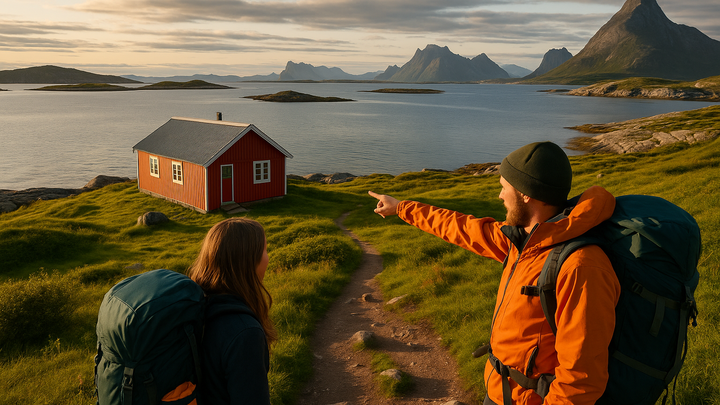
7-day "hut-to-hut" along the coast: ferry + trail + hut
Ferry-linked routes through national parks in Norway form a coastal chain: hiking trails Norway meet Norway national parks, best national park hikes Norway and…
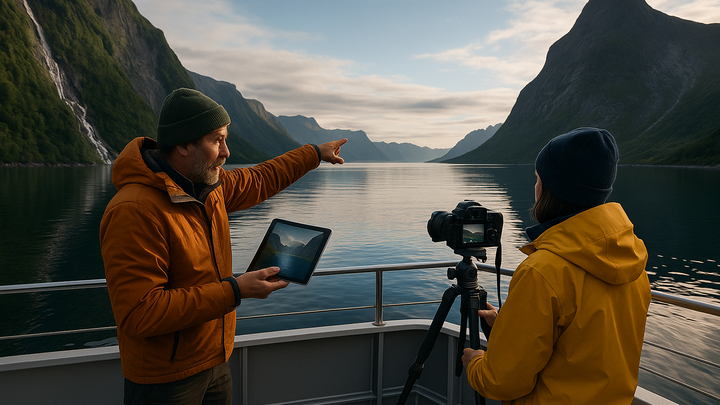
Photo school on board: a cruise workshop for hunting light
Learn pro shots en route and disembark on hiking trails in Norway. Outdoor adventures in Norway turn the best national park hikes in Norway into RAW photos on …
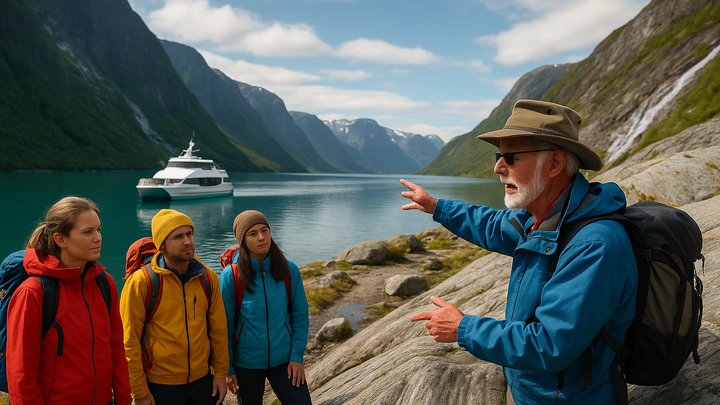
Geo-cruises: glacier science in a hiking format
C ruise past moraines, walk hiking trails in Norway with a geologist. Outdoor adventures in Norway reveal the best national park hikes in Norway and the landsc…
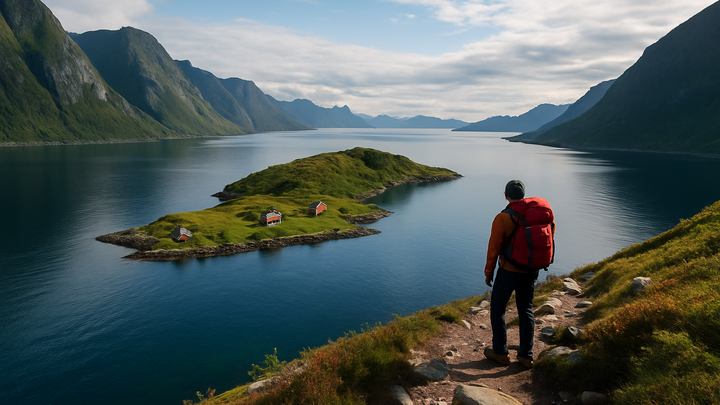
Off-the-beaten-track islands: hiking accessible only by express boat
Fast boats unlock remote hiking trails in Norway. Outdoor adventures in Norway on the best national park hikes without crowds—pure silence on island fjords.
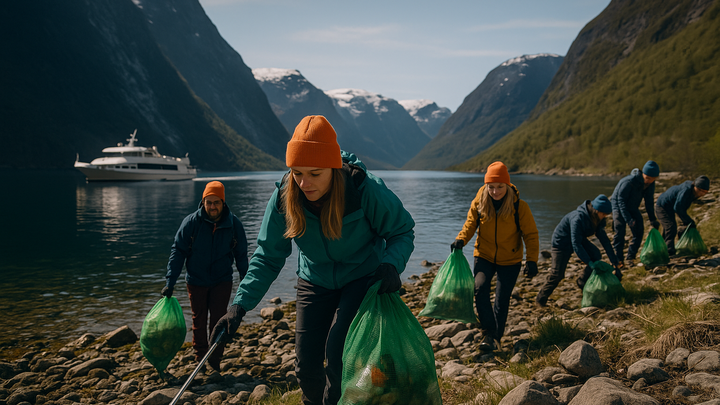
Cruise clean-up: how to volunteer to clean up the fjords
Join eco crews, hike trails in Norway to litter hotspots. Outdoor adventures in Norway meet the best national park hikes in Norway through positive-impact fjor…
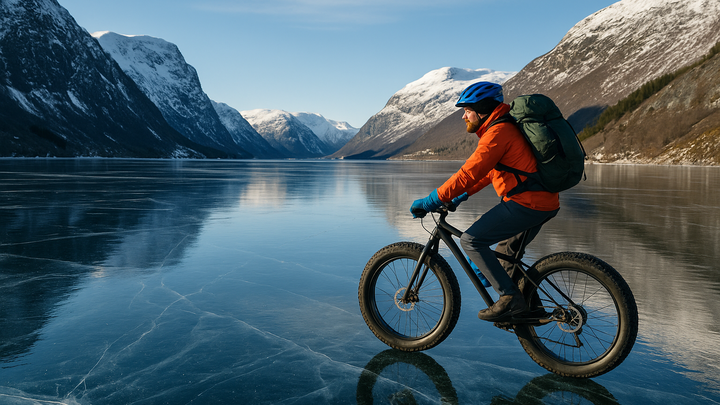
Fjord fatbike on ice: an expedition without skis
Ride frozen fjords beside hiking trails in Norway. Outdoor adventures in Norway meet the best national park hikes in Norway on tyre-wide ice loops across Norwa…
2 comments
Log in to leave a comment
Hvilket fjordområde ville dere anbefale for en vinter‑fottur med spektakulær utsikt? 🌨️