



Are there wolves and bears in Norway?
Yes — wolves, lynx and brown bears all live in Norway, and no, you are very unlikely to meet one. All three are rare, shy and mostly active at night. The last person killed by a wolf in Norway died in 1800; the last fatal bear attack on the mainland was in 1906.
Updated 26 September 2026 · Numbers from Rovdata’s national monitoring; risk figures from Tidsskrift for Den norske legeforening · By Ksenia
How many there are
- Wolves: 55–58 registered inside Norway in the winter of 2025–2026 — 34–36 of them entirely in Norway and 21–22 in the border area with Sweden. Three and a half litters were born, below the national target of 4–6. Source: Rovdata, 12 May 2026.
- Brown bears: 185 individual bears were identified in Norway in 2025, 80 of them females — six fewer than the year before. The estimate was 10.3 litters against a national target of 13. Source: Rovdata, 30 March 2026.
- Lynx: about 90.5 family groups before the 2026 hunting season, which corresponds to roughly 443–617 animals. The national target is 65 family groups. Source: Rovdata, 2026.
- Risk to people: probably no one has been killed by a wolf in Norway since 28 December 1800, and the last fatal bear attack on the mainland was in 1906. Source: Tidsskrift for Den norske legeforening, 2016.
- Where they are: wolves in the forests along the Swedish border in Innlandet and Østfold; bears mainly in Hedmark, Trøndelag and Finnmark, close to the borders with Sweden, Finland and Russia; lynx in the forests of central and eastern Norway. Source: Rovdata’s regional monitoring.
Will you actually see one?
Almost certainly not. Fifty-odd wolves and under two hundred bears are spread over a country the size of Norway, they hunt at night and they move away from people long before people notice them. Most Norwegians who live inside the wolf zone have never seen a wolf outside a photograph.
What you may see is a track in snow or mud, or droppings on a forest road. If you want a reliable sighting, a wildlife park is the honest answer — in the wild, even researchers depend on cameras and DNA samples rather than their own eyes.
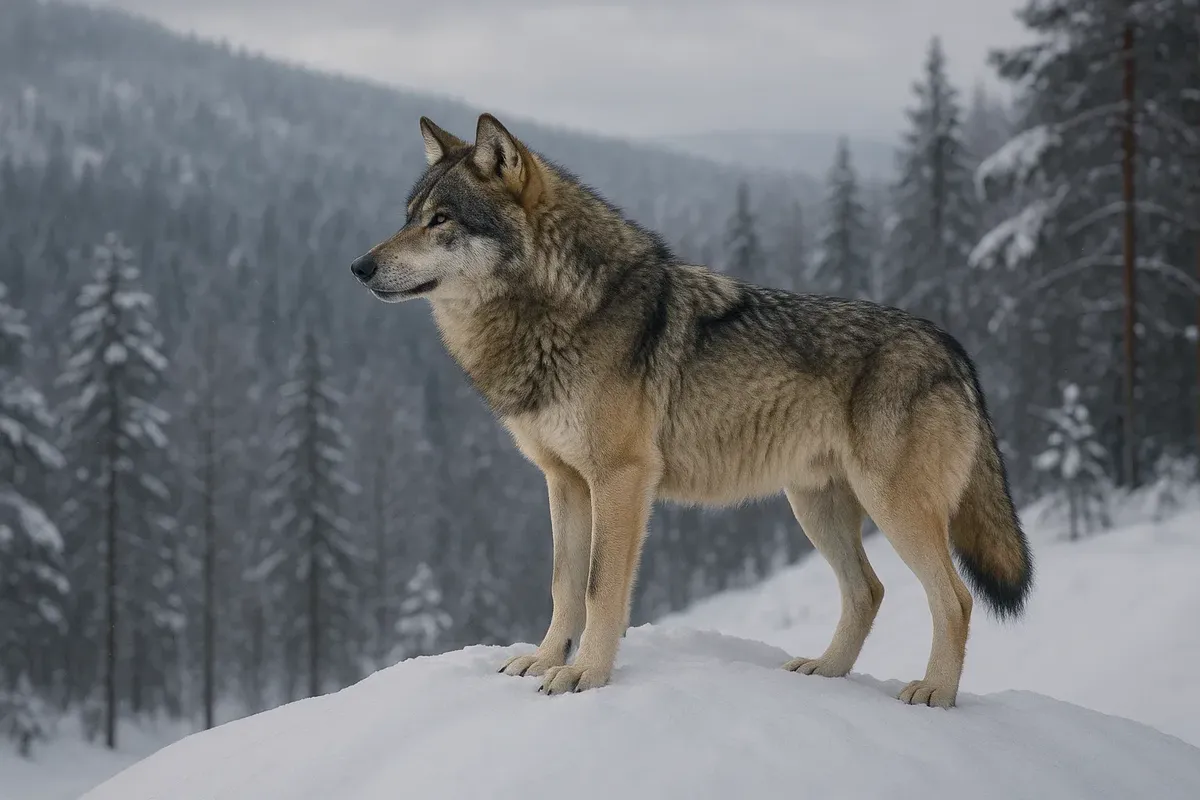
The wolf
The wolf lives in family groups in the forest belt along the Swedish border. Norway and Sweden share this population, which is why the monitoring counts border packs separately. The Norwegian population is small and has been shrinking: 55–58 animals in the winter of 2025–2026 against 59–66 the winter before (Rovdata, May 2026).
Wolves avoid people. Attacks in Europe are rare and are usually linked to rabies or to animals that have been fed; Norway has been free of rabies on the mainland for a long time.
The lynx
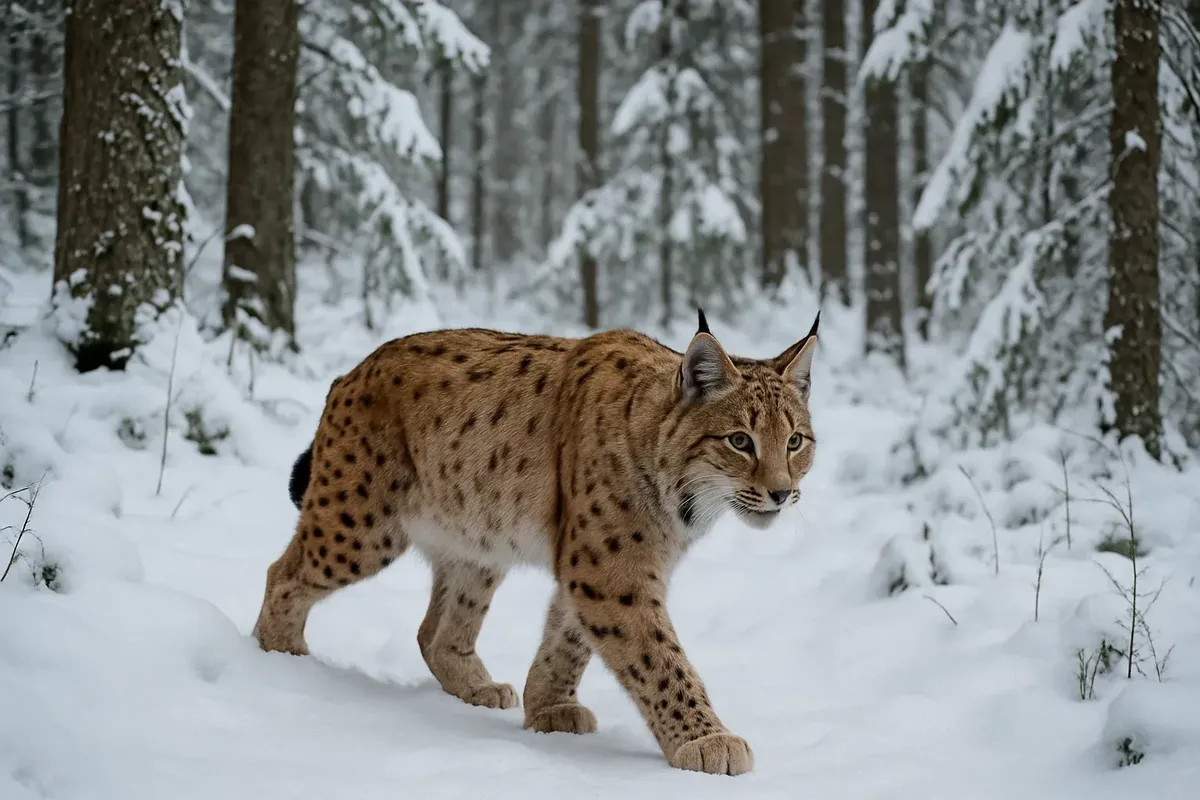
The Eurasian lynx is the most numerous of the three and the hardest to see: it hunts roe deer at dusk and in the dark, and stays in dense forest. Norway counts lynx by family groups — a female with kittens — and converts that into a population estimate: about 90.5 family groups in 2026, or roughly 443–617 animals (Rovdata).
A lynx will leave as soon as it notices you. There are no recorded attacks on people in Norway.
The brown bear
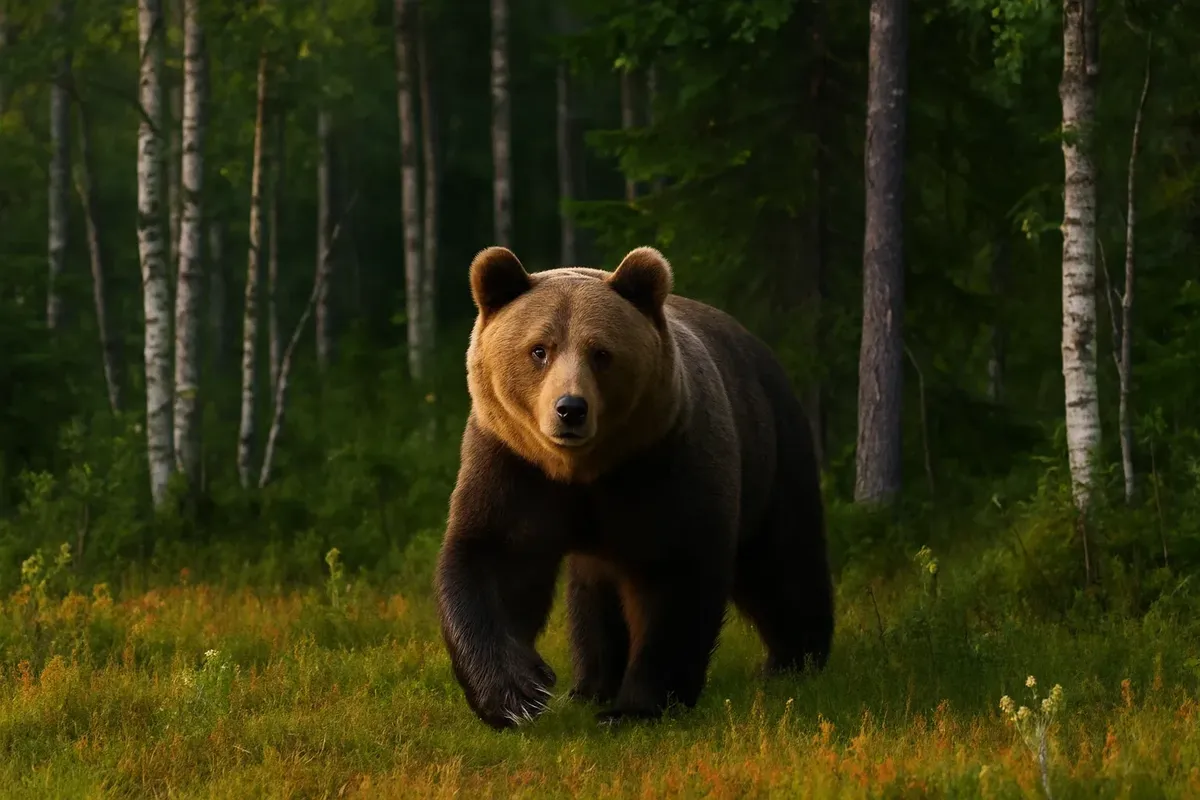
Norway has the smallest brown bear population in Scandinavia: 185 individuals were identified in 2025, most of them males that wander in from Sweden, Finland and Russia (Rovdata, March 2026). Bears are found mainly in Hedmark, Trøndelag and Finnmark.
Bears avoid people too. The danger is not the animal you see at a distance, but the one you surprise at close range — especially a female with cubs or a bear on a carcass. The Norwegian Environment Agency keeps a page of advice for anyone worried about meeting one.
If you meet a large predator
- Keep your distance and never approach for a photograph.
- Make yourself known: speak in a calm voice so the animal understands you are a person.
- Back away slowly. Do not run — running triggers a chase reflex.
- Never feed a wild animal, and never leave food or rubbish at a camp.
- Keep dogs on a lead. A loose dog can bring a predator back to you.
- If a bear behaves aggressively, stand your ground, keep talking and retreat once it has moved away.
Quick answers
Are there wolves in Norway? Yes, 55–58 in the winter of 2025–2026, in the forests along the Swedish border.
How many bears are there? 185 individuals were identified in 2025, mainly in Hedmark, Trøndelag and Finnmark.
Is hiking in Norway dangerous because of predators? No. The last death from a wolf was in 1800 and from a bear in 1906. Weather, water and terrain are the real risks.
Can I see a wolf or a bear on a normal trip? Realistically no. A wildlife park is the only reliable way.
What about wolverines? Norway has a fourth large predator, the wolverine, in the mountains — even shyer than the other three. See also: musk oxen in Norway. See also: wildlife photography spots. See also: leash rules for dogs in nature.
More on NorgeGuide
- Wildlife and flora of Norway
- The best national parks for seeing wildlife
- Where and how to see seals in Norway
- Nature, national parks and outdoor life
Sources (checked 26 September 2026)

1 comment
Log in to leave a comment
Hvilket rovdyr ville dere helst sett i naturen, og hvor ville dere gå for å ha størst sjanse til å oppleve det? 🤔