


Sámi people and culture: what is joik, what does the flag mean, and who is Sámi?
Updated 27.09.2026. Facts checked against Store norske leksikon (the Norwegian encyclopedia), the Norwegian Agriculture Agency and Visit Tromsø.
Short answer: The Sámi are an indigenous people whose homeland, Sápmi, spans Norway, Sweden, Finland and Russia. Sámi culture includes joik, the gákti (traditional dress), reindeer herding, the Sámi languages, its own flag and the national day on 6 February. Nobody knows exactly how many Sámi there are. Before the 2025 election, 25,676 people were on the Sámi Parliament electoral roll in Norway. Want to know if you have Sámi ancestry yourself? See also: Sámi identity and ancestry.
Key facts
| Topic | Facts | Source, checked |
|---|---|---|
| Sápmi | From Dovre in the southwest to the White Sea in the northeast | Store norske leksikon, updated 10.09.2026 |
| Sámi Parliament | Founded 1989, seat in Karasjok, 39 representatives, elections every four years | Store norske leksikon, updated 23.06.2026 |
| Electoral roll | 25,676 people before the 2025 election (5,505 in 1989) | Store norske leksikon, 27.09.2026 |
| The flag | Adopted 1986 in Åre, red half-circle for the sun, blue for the moon | Store norske leksikon, updated 08.09.2025 |
| National day | 6 February, marking the first Sámi assembly in Trondheim in 1917 | Store norske leksikon, updated 13.12.2025 |
| Languages | 10 Sámi languages; North, Lule and South Sámi are used in Norway | Store norske leksikon, updated 24.07.2026 |
| Reindeer herding | The 2024/25 grazing crisis hit about 147,000 reindeer, 68% of the winter herd | Norwegian Agriculture Agency, 02.12.2025 |
What applies to you?
- You wonder if you have Sámi heritage: see who counts as Sámi.
- You want to know what the flag colours mean: see the Sámi flag.
- You are a visitor and want to experience Sámi culture: see where to experience it.
- You want to learn about joik, gákti or reindeer herding: see joik, gákti and reindeer herding.
Who are the Sámi, and when did they come to Norway?
The Sámi are an indigenous people whose homeland, Sápmi, stretches from Dovre in the southwest to the White Sea in the northeast (Store norske leksikon, updated 10.09.2026). So the Sámi did not "come" to Norway: they lived in these areas long before today's borders were drawn. The Sámi language is believed to have spread across Sápmi in the Early Iron Age, 500 BC–AD 500 (same source).
Traditional livelihoods are fishing, hunting, gathering, duodji (handicraft) and reindeer herding (Store norske leksikon: samer, updated 24.01.2026). Today most Sámi live in northern Fennoscandia and in the larger cities of Northern Europe (same source).
From the mid-1800s the state pursued a policy of Norwegianisation. The Wexelsen decree of 1898 banned Sámi and Kven/Finnish in schools (Store norske leksikon: samenes historie).
Who counts as Sámi, and what is the Sámi Parliament?
The Sámi Parliament (Sametinget) was founded in 1989 and has its seat in Karasjok. It has 39 representatives and is elected every four years, most recently on 8 September 2025 (Store norske leksikon, updated 23.06.2026).
To be on the Sámi Parliament electoral roll you must see yourself as Sámi and also meet one of these requirements (Store norske leksikon: Sametingets valgmanntall):
- you had Sámi as your home language,
- a parent, grandparent or great-grandparent had Sámi as their home language, or
- a parent is or has been on the electoral roll.
The roll is not a census of all Sámi: children under 18 and Sámi who do not register are not included. Before the 2025 election, 25,676 people were on the roll. How to find out more about your own family: how to find out if you are Sámi.
What do the colours in the Sámi flag mean?
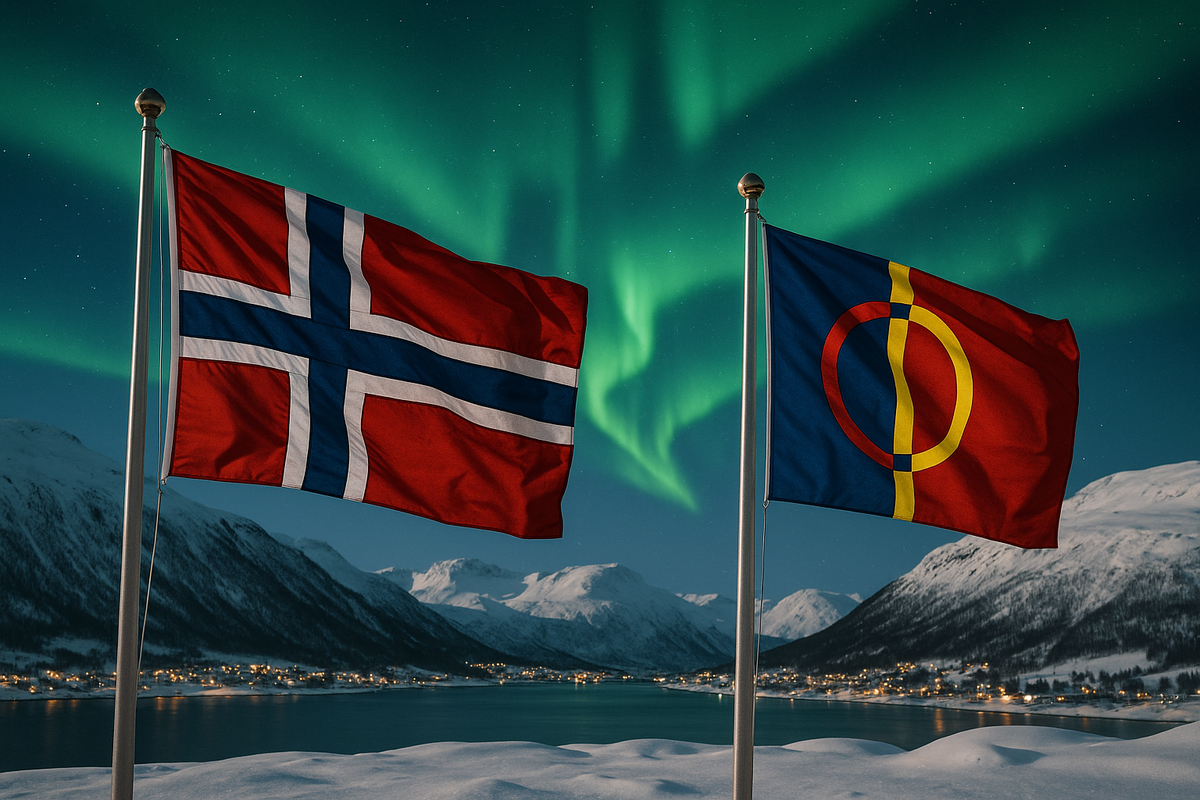
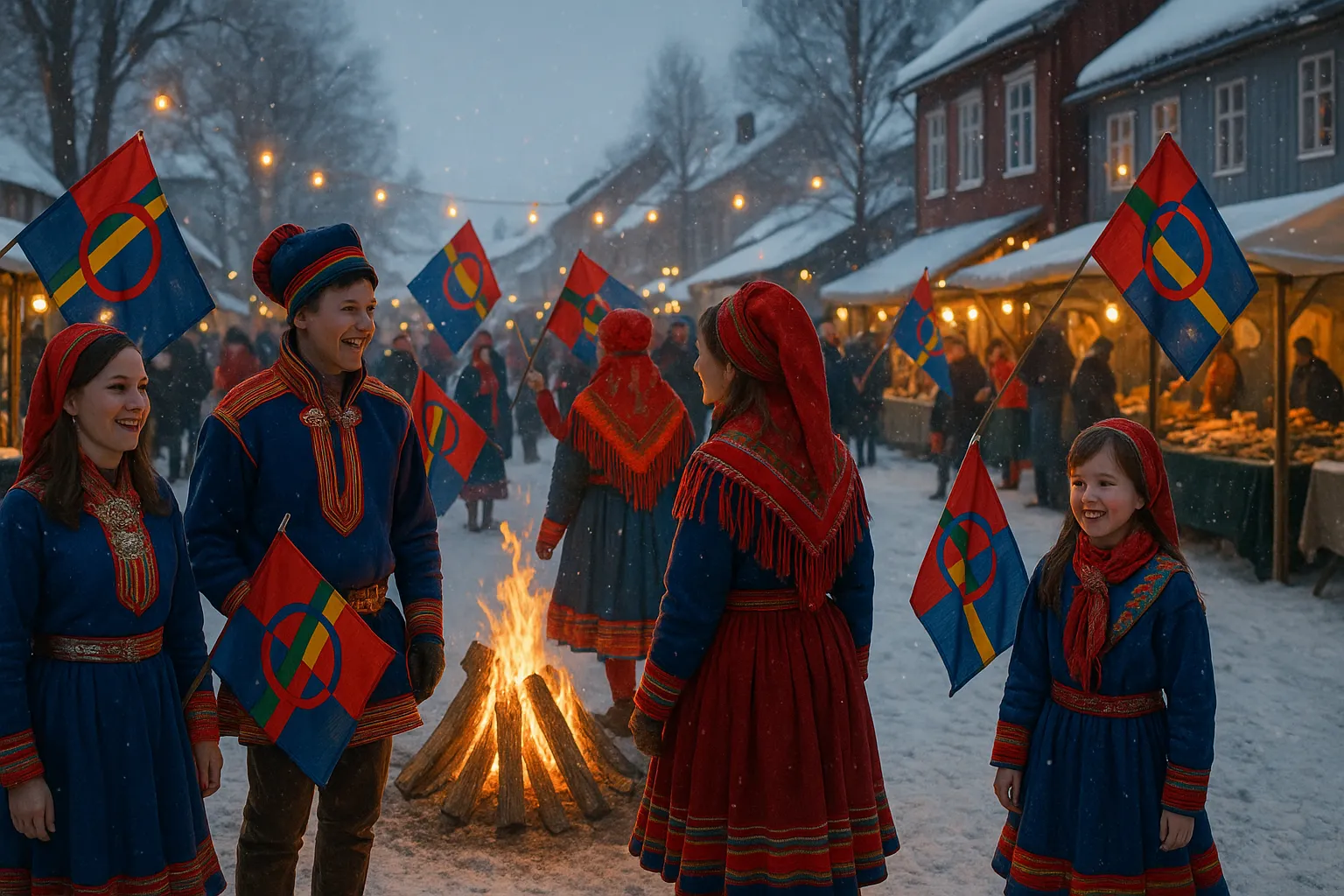
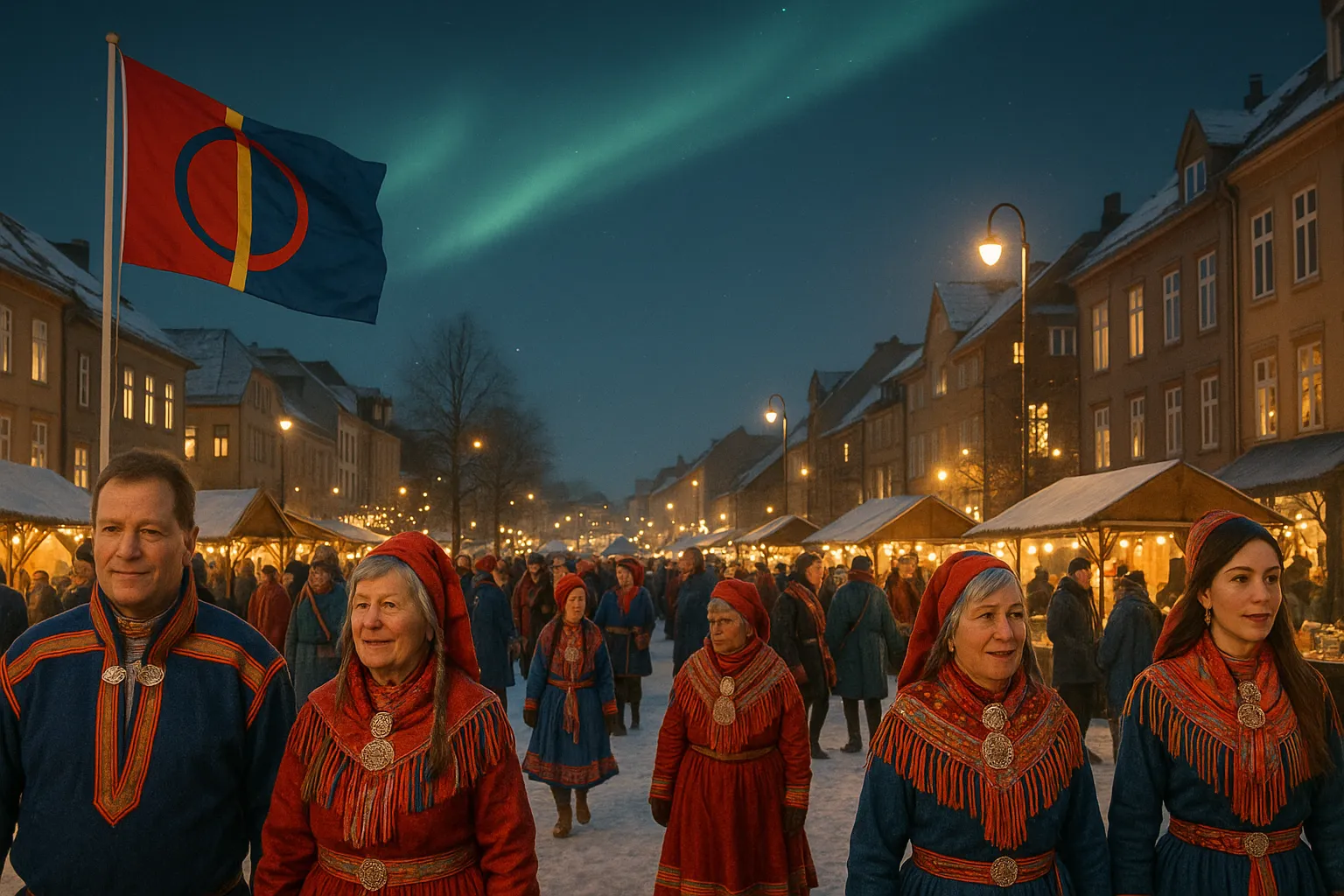
The flag was adopted at the 13th Nordic Sámi Conference in Åre in 1986. The design came from Astrid Båhl from Skibotn. The divided circle is an old Sámi symbol: the red half stands for the sun, the blue half for the moon, and the circle also stands for Sámi unity. The colours red, blue, yellow and green come from the gákti (Store norske leksikon, updated 08.09.2025).
Since 2003, 6 February has been an official flag day in Norway (same source). More about the symbols: Sámi symbols and the flag.
Why is Sámi National Day on 6 February?
The date marks the first Sámi assembly in Trondheim on 6–9 February 1917, where Sámi from several countries met. The Sámi Conference adopted the day as the national day in 1992 (Store norske leksikon, updated 13.12.2025).
Tromsø celebrates Sámi Week around 6 February, with championships in lasso throwing and reindeer racing on Storgata, a cultural programme and a market (Visit Tromsø, checked 27.09.2026).
How many people speak Sámi?
There are ten Sámi languages. In Norway, North Sámi, Lule Sámi and South Sámi are used today, and North Sámi is used by about 90% of Sámi speakers (Store norske leksikon, updated 24.07.2026). Nobody knows for sure how many have North Sámi as their first language – probably between 20,000 and 30,000, and about 70% of them live in Norway (Store norske leksikon: nordsamisk, updated 20.05.2024).
The Sámi language administrative area covers 13 municipalities in Troms, Finnmark, Nordland and Trøndelag (Store norske leksikon). More: the Sámi language.
What is joik (yoik)?
Joik is the traditional Sámi form of music, with reciting song, repetition and short formulas. A joik is about a person, an animal or a place. The most common today is the personal joik, which shows that a person belongs to the community. In pre-Christian times joik was part of shamanic rituals (Store norske leksikon, updated 26.11.2024). More: joik and Sámi music.

What is a gákti (kofte)?
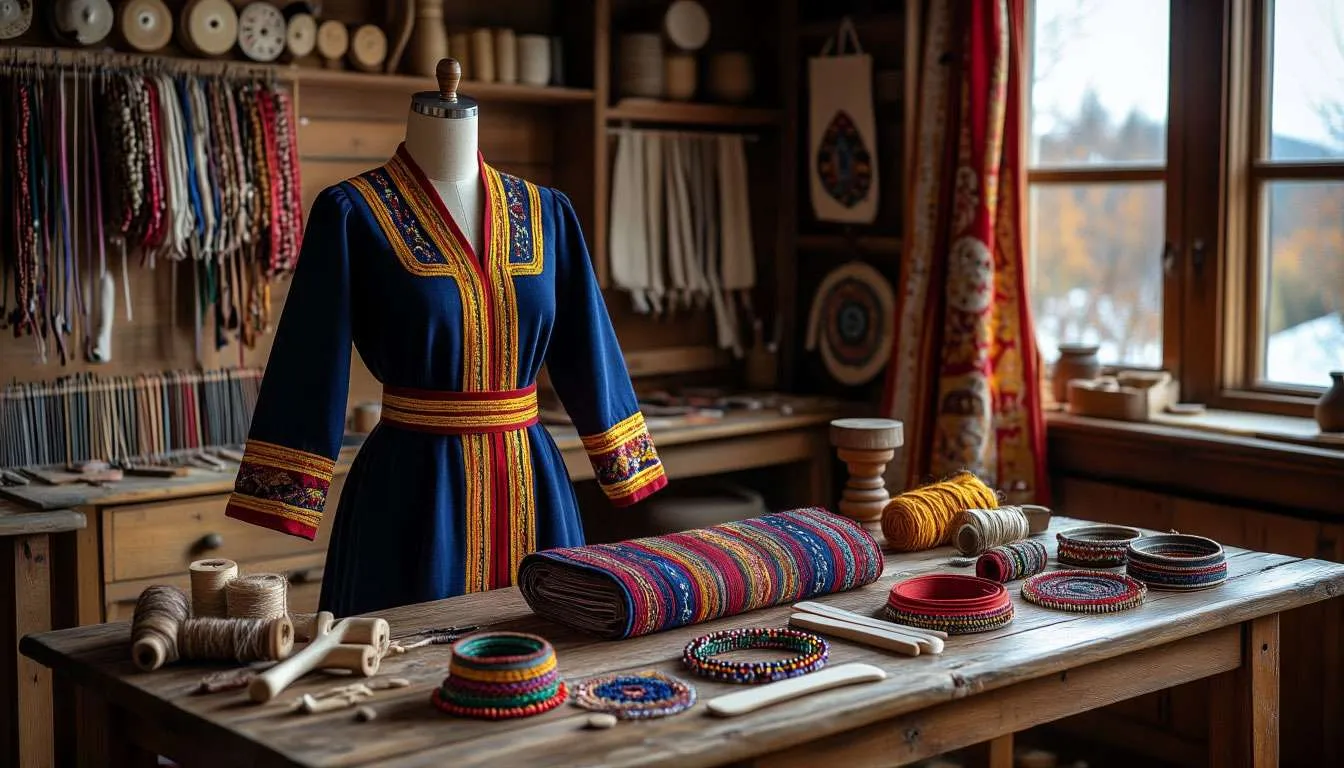
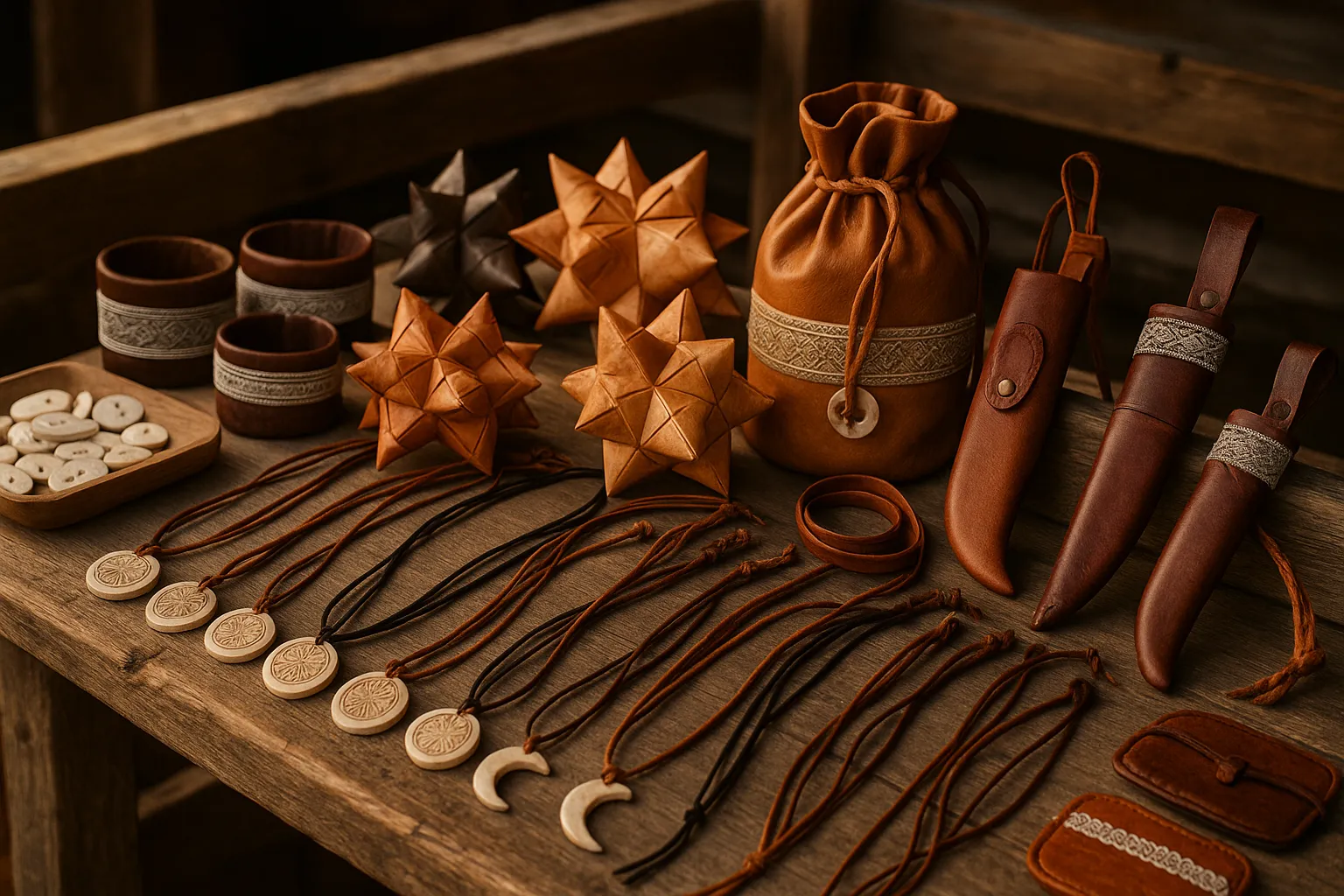
The kofte is the traditional Sámi outer garment. It is called gákti in North Sámi, gáppte in Lule Sámi and gaepti in South Sámi. The gákti shows where the wearer is from, and there are versions for everyday and festive wear, summer and winter (Store norske leksikon, updated 26.01.2023). Sámi handicraft is called duodji – see Sámi handicraft and art.
What is reindeer herding?
Reindeer herding is husbandry of tame or semi-tame reindeer, and it is an important part of Sámi culture and identity. In the Sámi reindeer grazing areas only people of Sámi descent may herd reindeer, as well as their spouses, cohabitants and adopted children (Store norske leksikon). In winter 2024/25 there was a grazing crisis: about 147,000 reindeer, 68% of the winter herd, were affected (Norwegian Agriculture Agency, 02.12.2025). More: reindeer herding among the Sámi.

What do the Sámi eat, and what is a lavvu?
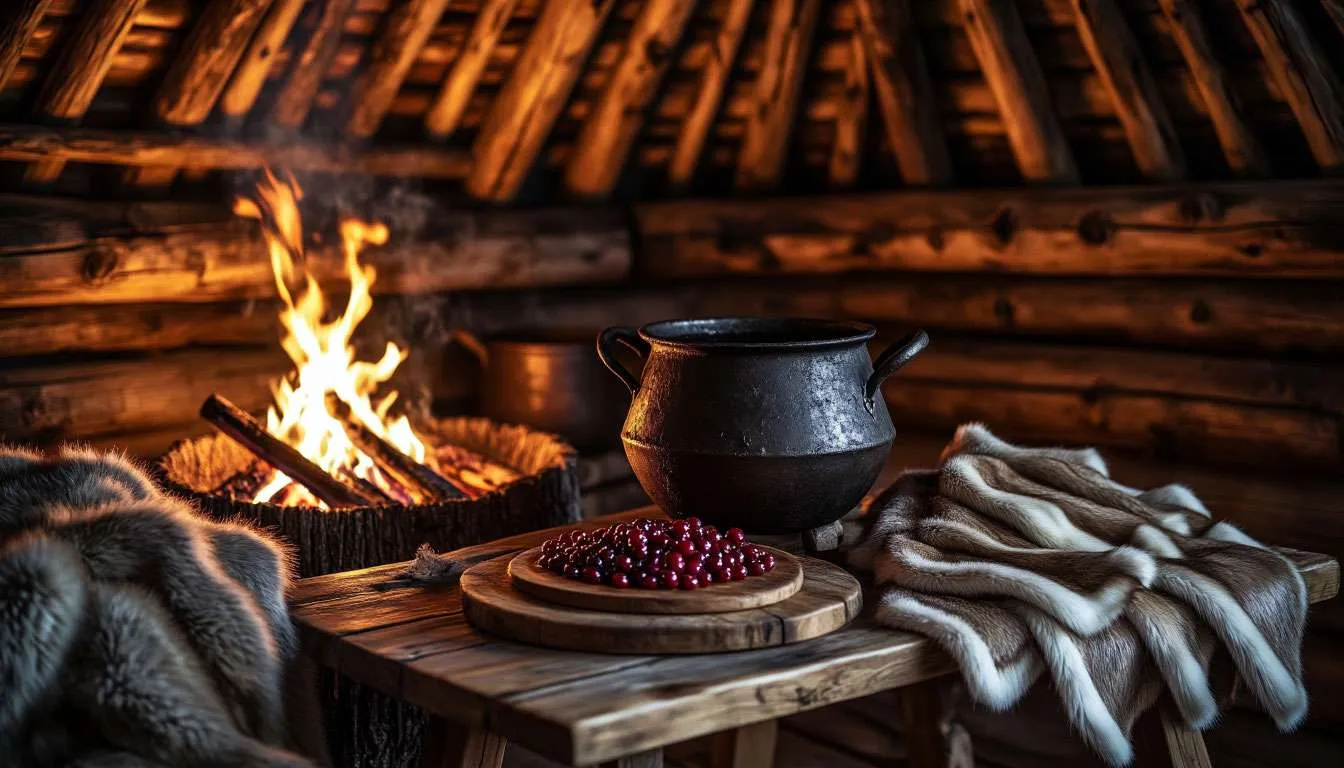
Biđos is a festive dish of reindeer meat, potatoes, vegetables and stock (Store norske leksikon, updated 26.11.2024). More about dishes and ingredients: Sámi food.
A lavvu (lavvo) is a cone-shaped Sámi tent with slanted poles and a smoke hole at the top. It was used when the Sámi moved with their reindeer, but also for longer stays. Today lavvus are made for hiking and outdoor life (Store norske leksikon, updated 21.02.2025).
Where can you experience authentic Sámi culture?
Around Tromsø you can feed reindeer, go reindeer sledding and hear stories in a lavvu. Hosts may serve biđos and introduce you to joik. Most experiences run from October to March, because the herders follow the grazing (Visit Tromsø, checked 27.09.2026).
- Ask before you photograph people and reindeer herds, and keep your distance from reindeer in the wild.
- Choose tours run by Sámi hosts.
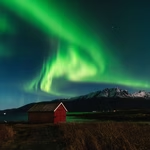
- Combine it with the northern lights – see northern lights in Norway.
Practical guide: how to experience Sámi culture. Sámi souvenirs: Sámi handicraft in Lofoten.
Tours and hotels in the north
| City | Tours and travel agencies | Hotels |
|---|---|---|
| Tromsø | Tours and travel agencies | Hotels |
| Alta | Tours and travel agencies | Hotels |
| Hammerfest | Tours and travel agencies | Hotels |
| Kirkenes | – | Hotels |
| Bodø | Tours and travel agencies | Hotels |
| Trondheim | Tours and travel agencies | Hotels |
Photos: Sámi culture


People also ask
- What is Sámi culture?
- When did the Sámi come to Norway?
- How long have the Sámi lived in Norway?
- How do the Sámi live today?
- How do I find out if I have Sámi heritage?
- Where is the Sámi Parliament?
- What do the colours in the Sámi flag mean?
- Why is Sámi National Day on 6 February?
- How many people speak Sámi in Norway?
- How many Sámi languages are there?
- What is joik?
- What is a gákti?
- What is reindeer herding?
- What do the Sámi eat?
- What is a lavvu?
- Where can I experience authentic Sámi culture?
Frequently asked questions about the Sámi and Sámi culture
The culture of the Sámi, the indigenous people of Sápmi: joik, the gákti, duodji, reindeer herding, the Sámi languages, its own flag and the national day on 6 February (Store norske leksikon).
The Sámi are an indigenous people and lived in Sápmi long before today's borders. The Sámi language is believed to have spread across Sápmi in the Early Iron Age, 500 BC–AD 500 (Store norske leksikon).
For the Sámi Parliament electoral roll you must see yourself as Sámi, and you, a parent, grandparent or great-grandparent must have had Sámi as a home language, or a parent must be on the roll (Store norske leksikon).
The red half-circle stands for the sun and the blue for the moon. Red, blue, yellow and green are the colours of the gákti. The flag was adopted in 1986 (Store norske leksikon).
Nobody knows for sure. North Sámi probably has 20,000–30,000 first-language speakers, about 70% of them in Norway (Store norske leksikon).
The traditional Sámi form of song. A joik is about a person, an animal or a place, and the personal joik is the most common today (Store norske leksikon).
25,676 people before the 2025 election. The roll does not count all Sámi (Store norske leksikon).
Most Sámi experiences near Tromsø run from October to March (Visit Tromsø).
A festive Sámi dish of reindeer meat, potatoes, vegetables and stock (Store norske leksikon).
Sources
All links checked 27.09.2026.
- Store norske leksikon: samer (updated 24.01.2026)
- Store norske leksikon: samenes historie (updated 10.09.2026)
- Store norske leksikon: Sametinget (updated 23.06.2026)
- Store norske leksikon: Sametingets valgmanntall
- Store norske leksikon: samisk flagg (updated 08.09.2025)
- Store norske leksikon: samenes nasjonaldag (updated 13.12.2025)
- Store norske leksikon: samisk (updated 24.07.2026)
- Store norske leksikon: nordsamisk (updated 20.05.2024)
- Store norske leksikon: joik (updated 26.11.2024)
- Store norske leksikon: kofte (updated 26.01.2023)
- Store norske leksikon: reindrift
- Store norske leksikon: biđos (updated 26.11.2024)
- Store norske leksikon: lavvo (updated 21.02.2025)
- Norwegian Agriculture Agency: resource accounts for reindeer herding 2024–2025 (02.12.2025)
- Visit Tromsø: Sámi experiences
- Visit Tromsø: Sámi Week in Tromsø
Readers' experiences
Have you been to Sámi Week, visited a reindeer host or heard joik? Write in the comments at the bottom of the page. We use your experiences when we update the guide.




0 comments
Log in to leave a comment