


Weather in Norway: what is it like and what should you wear?
Short answer: Weather in Norway changes quickly and varies a lot between the coast, inland and the north. In Oslo the normal is −2.3 °C in January and 17.7 °C in July; Bergen is milder in winter but gets about 2,500 mm of rain a year. Dress in layers, bring rain gear all year, and check Yr on the day – not ten days before.
Updated 26.09.2026 · Facts checked 26.09.2026 by the NorgeGuide editorial team
Weather in Norway – key facts
- Oslo (Blindern): January −2.3 °C, July 17.7 °C on average (normal 1991–2020). Source: Store norske leksikon – Klima i Norge, checked 26.09.2026.
- Bergen (Florida): January 2.6 °C, July 15.6 °C (SNL); precipitation 2,495 mm a year (normal 1991–2020). Source: Bergen municipality, checked 26.09.2026.
- Tromsø: January −3.0 °C, July 12.3 °C (SNL, normal 1991–2020).
- Karasjok (Finnmark plateau): January −14.6 °C, July 13.6 °C – the coldest inland climate (SNL).
- Midnight sun: North Cape 14 May–29 July, Tromsø 20 May–22 July, Lofoten 28 May–14 July, Bodø 4 June–8 July, Svalbard 20 April–22 August. Source: Visit Norway, checked 26.09.2026.
- Forecast: Yr is a collaboration between NRK and the Norwegian Meteorological Institute. Source: yr.no, checked 26.09.2026.
What is the weather like in Norway?
Norway has a mild coastal climate thanks to warm Atlantic water (the North Atlantic Current), and a colder, drier inland climate. The coast gets the most rain and least frost; the interior and the Finnmark plateau get cold winters and warm, short summers. In the north there is polar night in winter and midnight sun in summer. The weather can change several times a day, especially in Western Norway and in the mountains.
What is the weather in Norway month by month?
- December–February: winter. Snow inland, in the mountains and in the north; on the south and west coast often rain and sleet around zero. Short days, polar night in the north.
- March–April: brighter days, still winter in the mountains and in the north – good for skiing and northern lights.
- May–June: spring and early summer, long light evenings, midnight sun in the north from May.
- July–August: warmest; the July normal in Oslo is 17.7 °C, but hot days above 25 °C and cool, rainy days both happen.
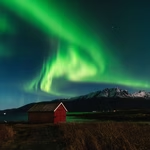
- September–October: cooler and often wetter on the coast; first snow in the mountains and in the north, aurora season.
- November: dark, wet and often grey – the least popular month to travel.
Averages are only a guide. Check the forecast for the place and the day.
When does it snow in Norway?
In the north, inland and in the mountains snow often arrives in October–November and stays until April or longer; in the high mountains it can snow in any month. Oslo usually has snow in periods from December to March. In Bergen and along the south and west coast precipitation mostly falls as rain, even in winter.
What to wear in Norway?
The answer is layers – the same principle all year:
- Base layer: wool or synthetic, not cotton (cotton holds moisture and gets cold).
- Mid layer: fleece or a wool sweater.
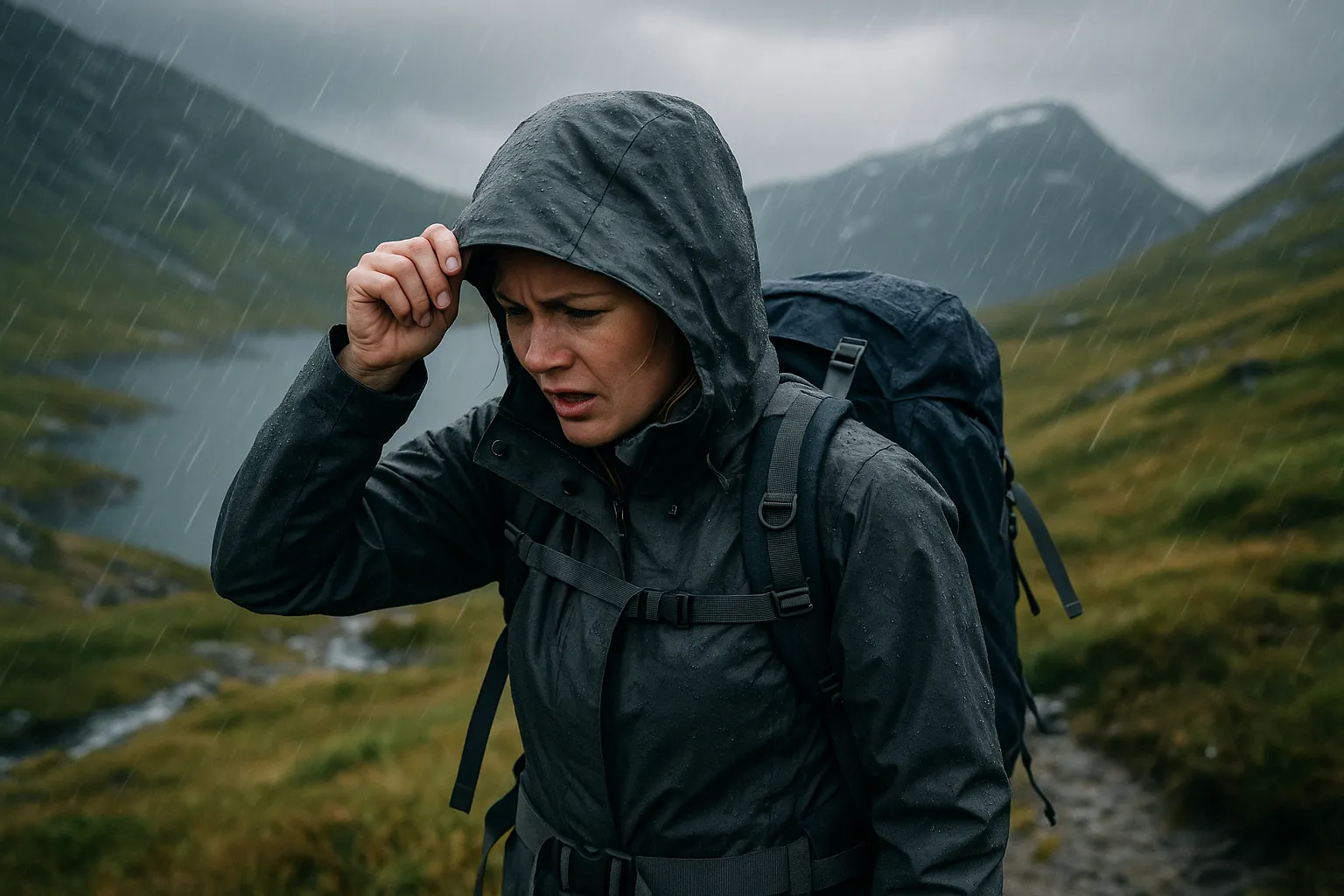
- Outer layer: wind- and waterproof jacket; rain trousers on the coast and on hikes.
- Shoes: waterproof shoes with good grip; in winter, ice grips or studded shoes for icy pavements.
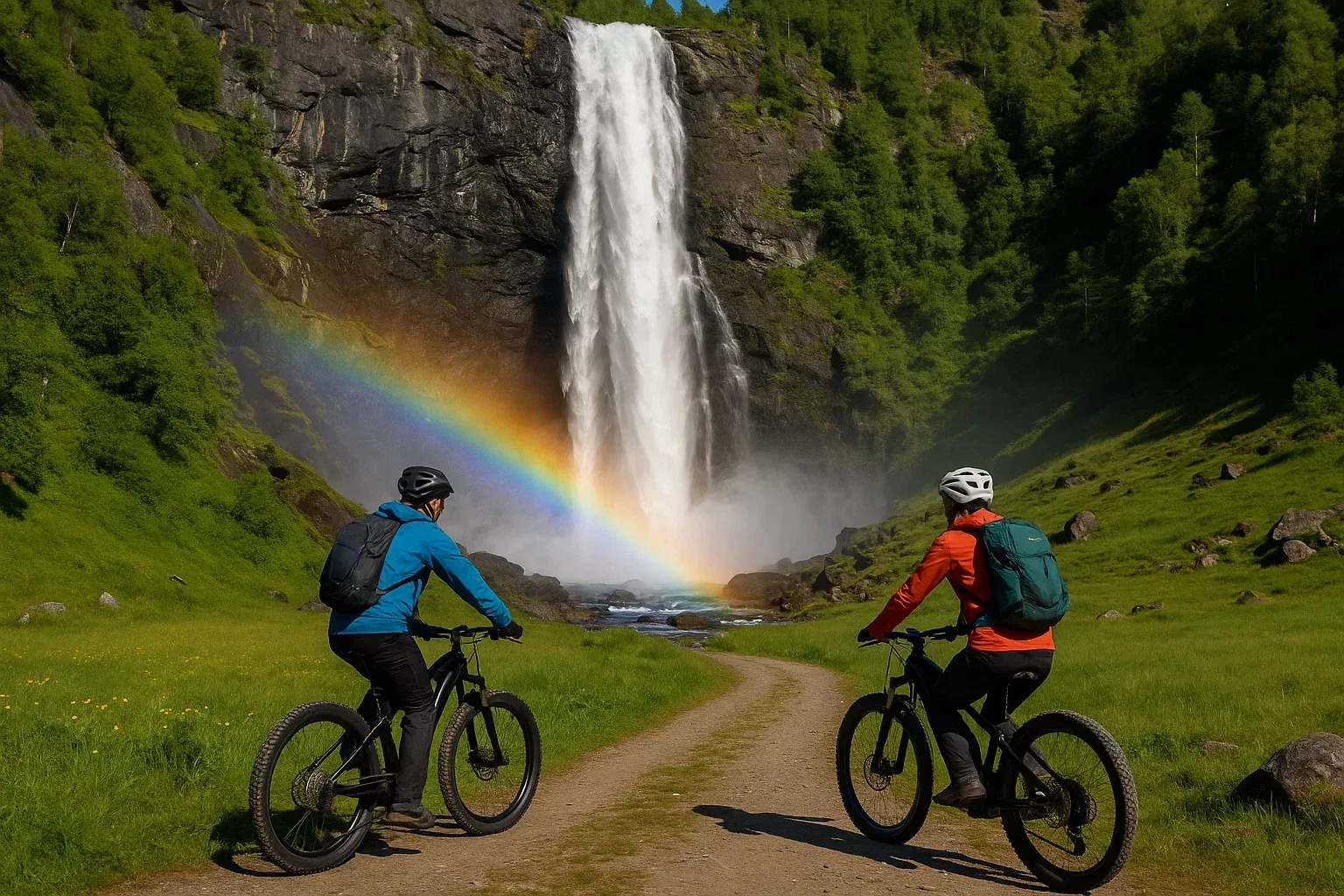
Summer: T-shirt and shorts on warm days, but always a sweater and a rain jacket in your bag. Spring and autumn: a warm jacket, hat and gloves for the evening. Winter: wool underwear, down jacket, hat, mittens, scarf and warm winter boots; extra layers in the north and on aurora tours.
Do I need an umbrella in Norway?
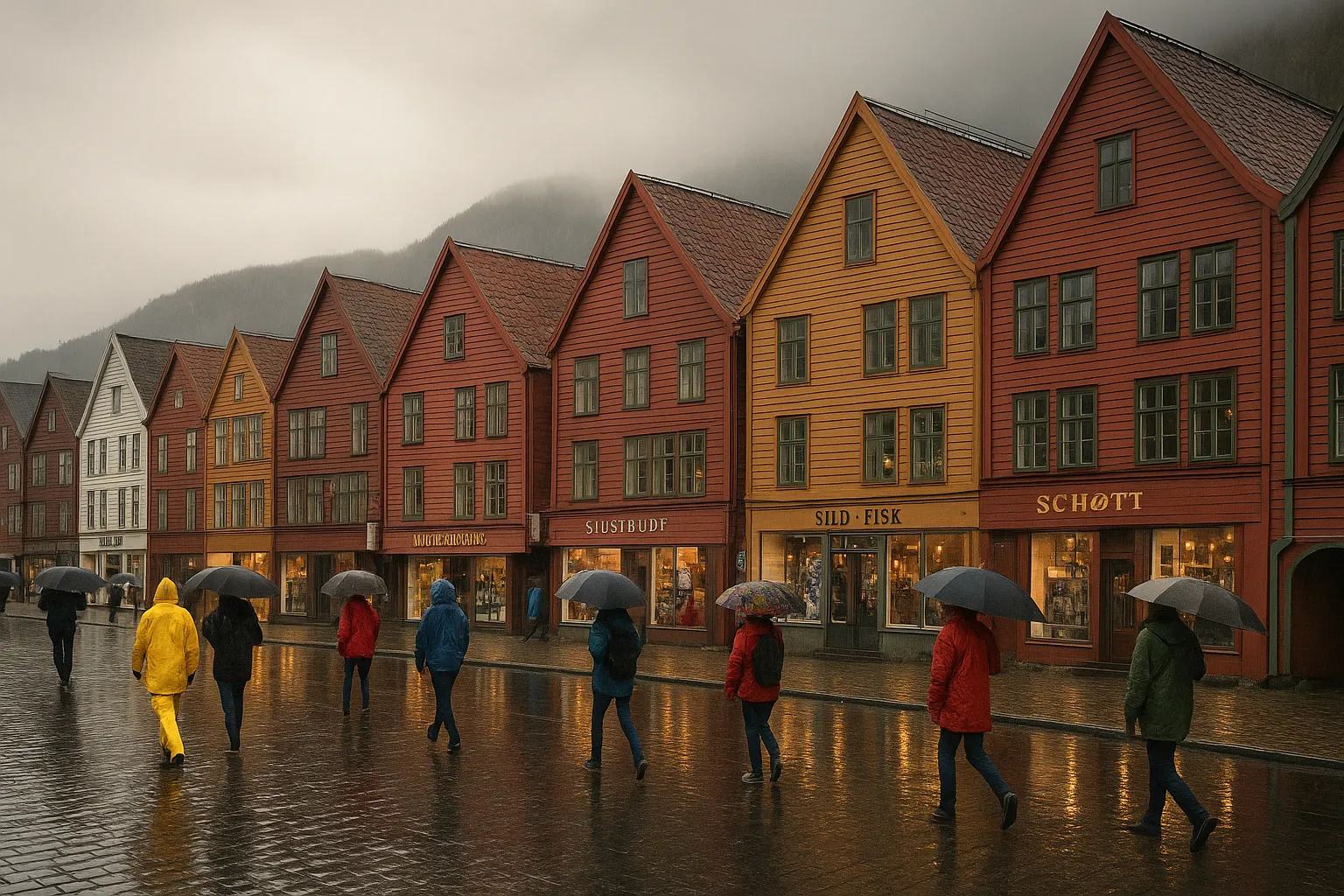
A rain jacket with a hood beats an umbrella – the wind takes it, especially in Western Norway. Read more in our guide to rain and umbrellas and which shoes to bring.
Do I need sunscreen in Norway?
Yes, especially in summer, in the mountains, at sea and on snow at Easter, when light reflects. See sunscreen in Norway.
How many sunny days does Norway have?
It varies a lot by region. See our separate guide: how many sunny days are there in Norway.
Which weather service is best in Norway – how to read Yr?
Yr (NRK and the Norwegian Meteorological Institute) is the standard in Norway, online and as an app, also in English. How to read it:
- Hourly forecast: temperature, precipitation in mm and wind for every hour over the next days – the most reliable part.
- Long-range forecast: the trend for the coming days; the further ahead, the less certain. Check again the day before and the same morning.
- Precipitation: the number in mm is the amount; a bar with a range (e.g. 0–2 mm) means uncertainty.
- Wind: in metres per second (m/s). Note the difference between mean wind and gusts – gusts are what you feel in the mountains and on the ferry.
- Warnings: the Norwegian Meteorological Institute issues warnings of dangerous weather (storm, heavy rain, snow, avalanches); check them on Yr and met.no before a trip.
What is the weather like in the mountains?
The mountains have their own weather: colder, windier and quick to change. Snow and fog can come even in summer. Check the forecast for the summit, not for the town in the valley, bring extra layers, and turn back in time.
When is the midnight sun – and how to see it?
The midnight sun is when the Sun does not set. North of the Arctic Circle: North Cape 14 May–29 July, Tromsø 20 May–22 July, Lofoten 28 May–14 July, Bodø 4 June–8 July, Svalbard 20 April–22 August (Visit Norway). Find a spot with an open view to the north around midnight. In winter it is the opposite: polar night – and northern lights, see northern lights in Norway.
What to do when the weather turns during your trip
Plan a plan B from the start: one thing to do indoors and one walk that works in the rain. Check the hourly forecast again the same morning, and see whether it is clearer in the next valley or further inland — in Western Norway the difference over short distances is often large.
- Indoors: museums, aquariums, baths and cafés in the cities — see the directory categories for the city you are in.
- At sea: if the boat trip or sea safari is cancelled because of waves, ask the operator about rebooking the next day — many do it without a fee.
- In the mountains: turn back in time. Fog and wind arrive quickly, and the path becomes hard to follow.
Hazard warnings: yr.no and varsom.no
Varsom.no is run by NVE together with the Norwegian Meteorological Institute and the Norwegian Public Roads Administration, and gathers avalanche warnings, flood and landslide warnings and severe weather warnings. The danger levels are green, yellow, orange and red — and black for avalanches (varsom.no).
If you are heading into the mountains in winter, read the avalanche warning for your region before you go, and remember that a warning is a planning tool: always assess the conditions on the spot yourself (varsom.no).
In winter the same goes for the roads: check road reports before driving, especially over mountain passes.
Where to buy rain gear and warm clothes (directory)
Video: Norwegian seasons (Visit Norway, 1:19)
Photos: weather and clothing in Norway

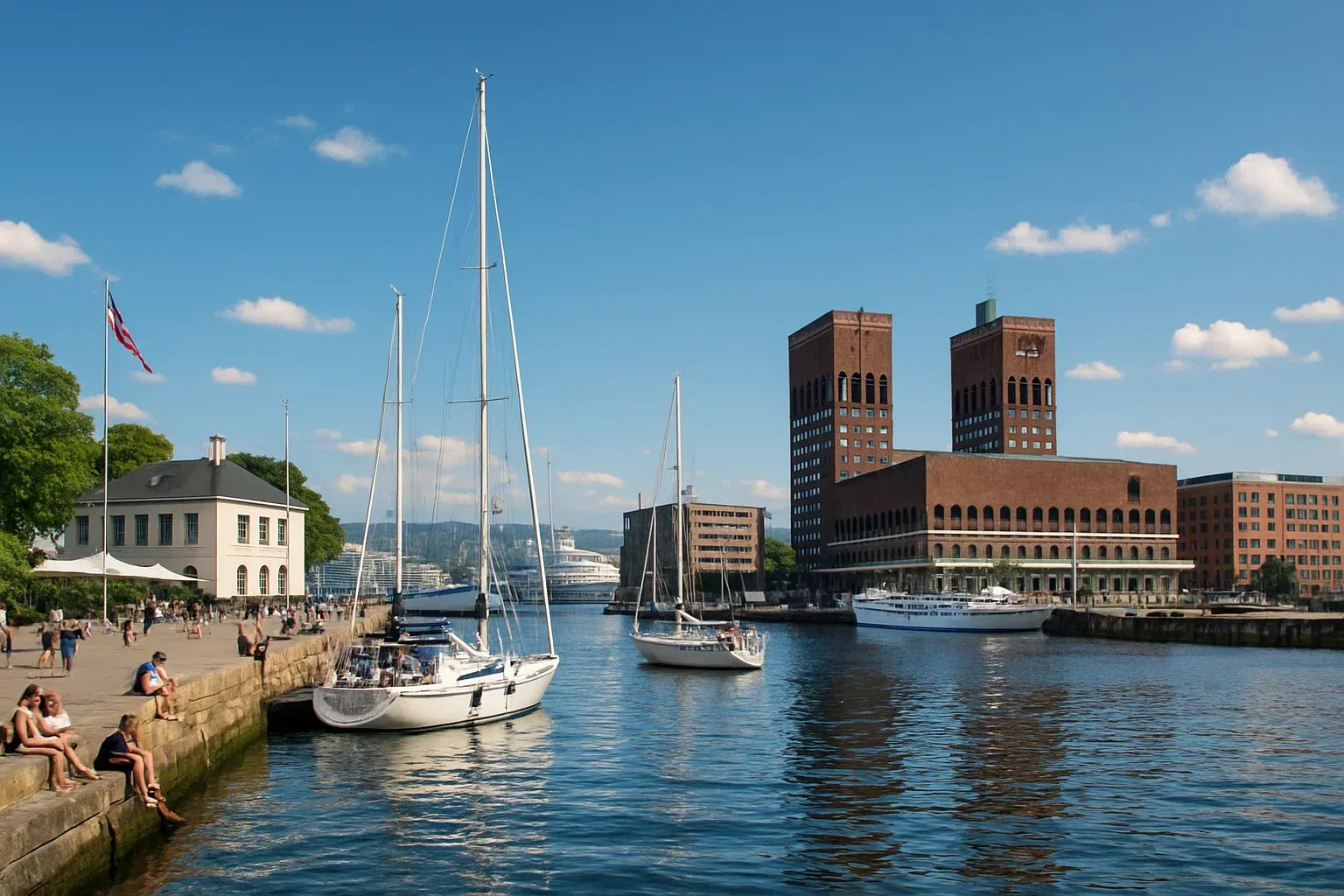
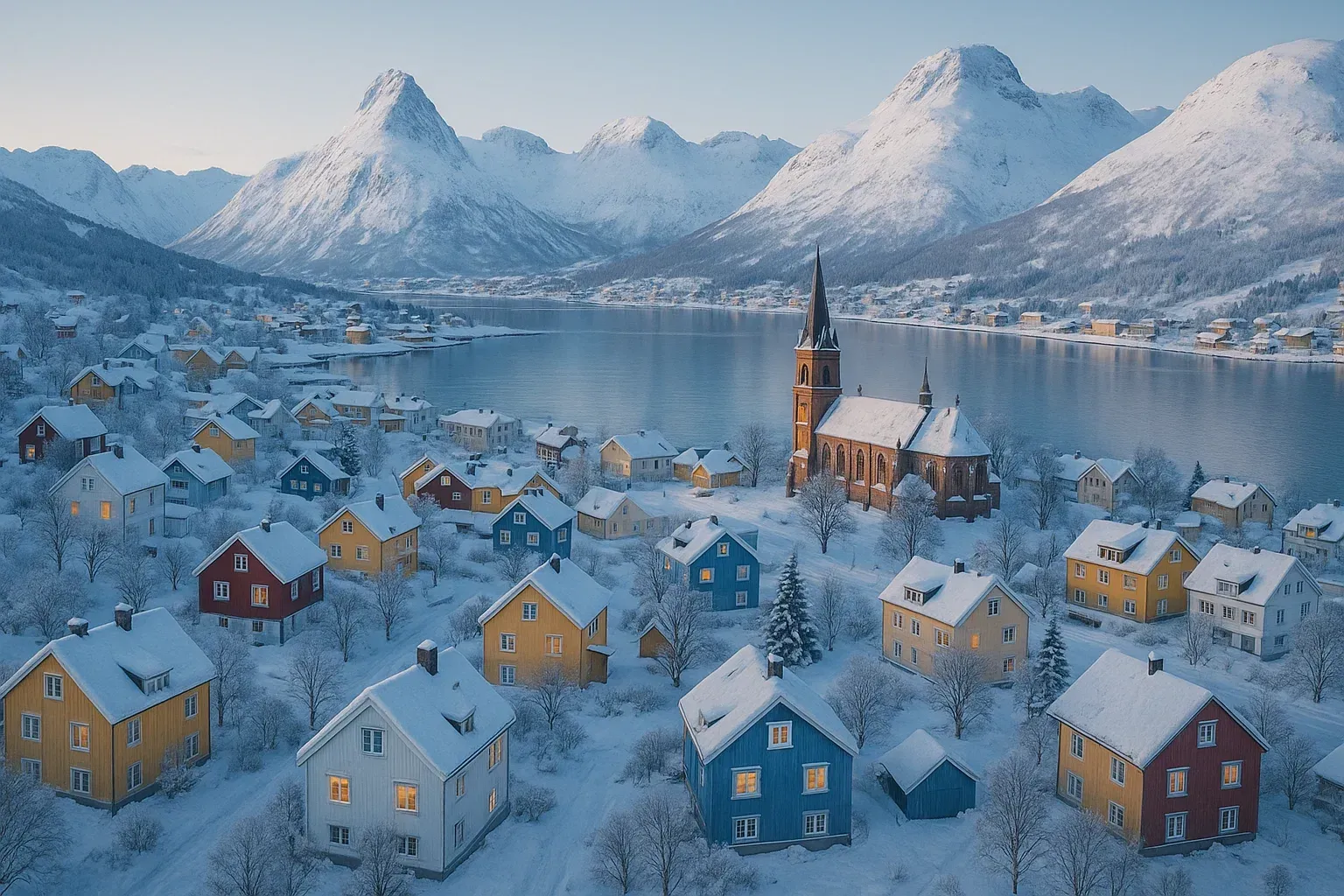
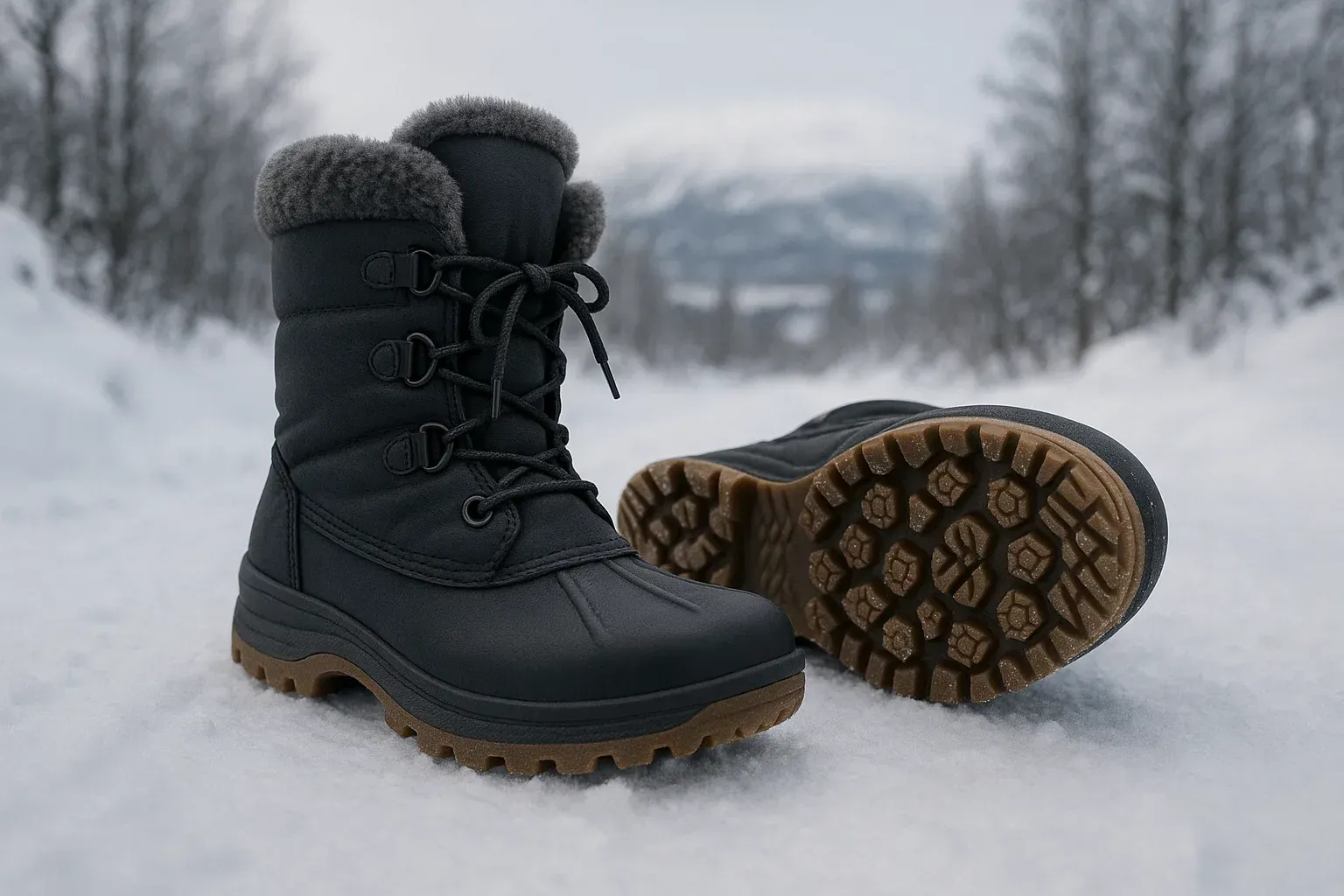
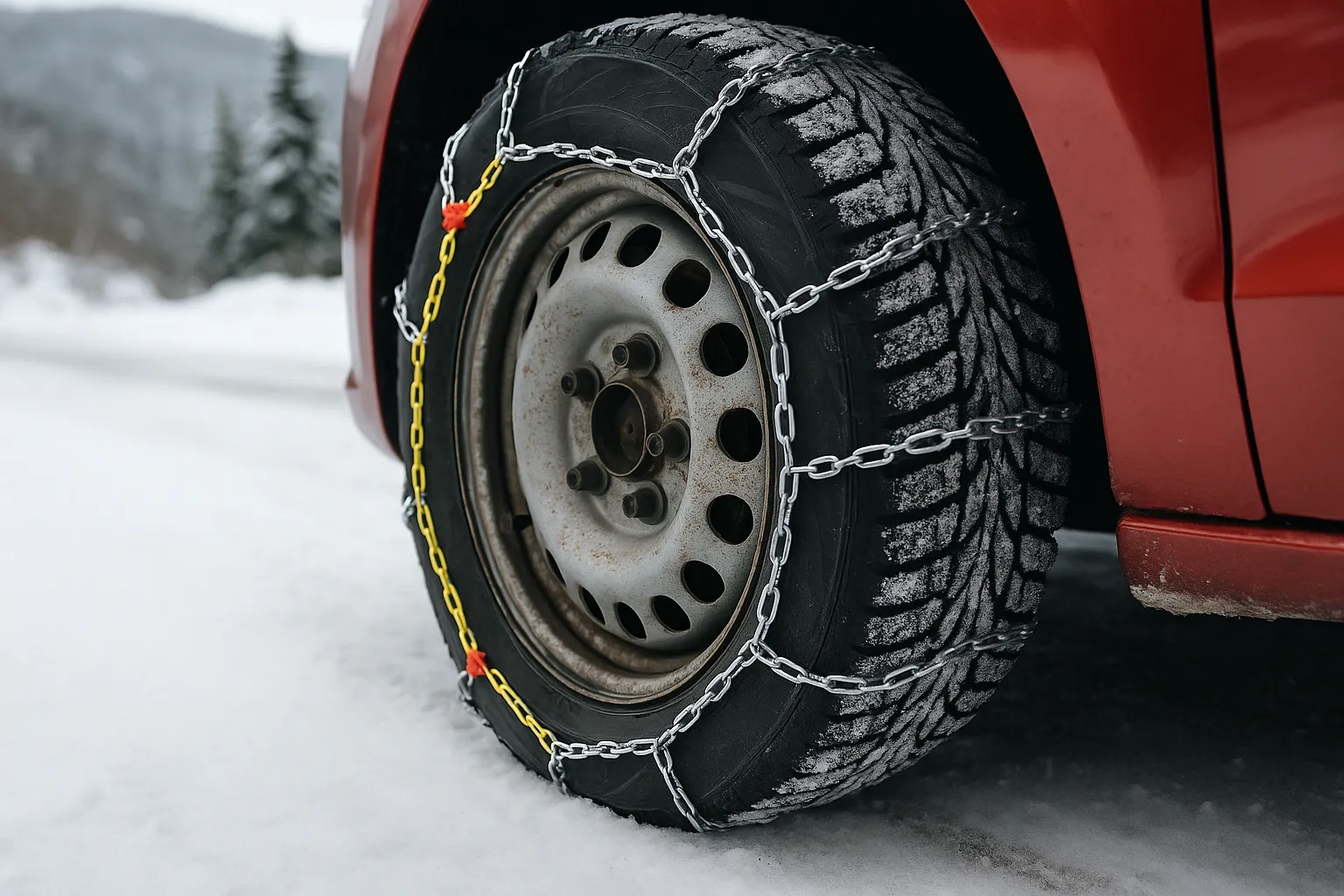
Weather in Norway FAQ
July, in most of the country.
January–February; coldest inland in Finnmark (Karasjok −14.6 °C in January).
Yes, about 2,500 mm a year – bring rain gear in any season.
Not necessarily, but evenings are cool and the mountains cold – bring a sweater.
Often in periods, but not always.
June–August is warmest and brightest; September can be lovely but wetter on the coast.
The polar night is approaching, it is cold and often snowy – dress for winter.
Yes, in Tromsø and Oslo among others – see rentals in the directory above; many aurora tours include a thermal suit.
No, use it as a trend; trust the hourly forecast for the next day or two most.
Sources
- Store norske leksikon – Klima i Norge, checked 26.09.2026
- Bergen municipality – climate figures, checked 26.09.2026
- Visit Norway – midnight sun, checked 26.09.2026
- Yr, checked 26.09.2026
- Norwegian Meteorological Institute – warnings, checked 26.09.2026


2 comments
Log in to leave a comment
Hva er det vanligste væreturistene misforstår når de bruker Yr.no? 🌦️