



Toll roads in Norway: how do you pay with AutoPASS, a rental car or an EV?
Updated 26.09.2026. Facts checked against autopass.no, vegvesen.no, Fjellinjen and Ferde.
Short answer: Tolls in Norway are collected automatically. Cameras read your number plate. Without an agreement, the owner of a Norwegian car gets an invoice by post at the regular rate, with no penalty charge. With an AutoPASS tag and agreement you usually save 20 %. Rental cars often have a tag, and the rental company charges you afterwards. A foreign-registered car can be registered free of charge with Epass24.
Key facts
| Question | Answer | Source, checked |
|---|---|---|
| Do I need a tag? | No, not for private cars or motorhomes used privately. Compulsory for vehicles over 3,500 kg used for business. | autopass.no, 26.09.2026 |
| Discount with tag and agreement | 20 % at most toll stations | autopass.no, 26.09.2026 |
| No agreement, Norwegian car | Invoice by post, regular rate, no penalty charge | autopass.no, 26.09.2026 |
| Foreign-registered car | Epass24 (free account, card charged monthly) or an invoice with a lookup fee, e.g. EUR 5.10 for Germany | autopass.no, epass24.com, 26.09.2026 |
| Oslo, petrol or plug-in hybrid | NOK 38 per crossing, NOK 47 in rush hour (no agreement) | Fjellinjen, rates from 01.01.2026 |
| Oslo, electric car | NOK 21, NOK 26 in rush hour (no agreement) | Fjellinjen, rates from 01.01.2026 |
| Bergen, petrol or hybrid | NOK 32, NOK 64 in rush hour (no agreement) | Ferde, rates from 01.01.2026 |
| Electric cars at toll stations | 30–100 % discount, depending on the toll project | autopass.no, 26.09.2026 |
| Ferries | 10 % off with a tag, 40–50 % with a prepayment agreement; an invoice costs NOK 35 extra | autopassferje.no, 26.09.2026 |
| Driving licence from outside the EU/EEA | Valid for 3 months from your arrival in Norway | vegvesen.no, 26.09.2026 |
What applies to you?
- Visitor with a rental car: the car often has a tag, and the rental company charges your card after the rental. See rental cars.
- Visitor in your own foreign-registered car: register the car with Epass24 before the trip to avoid lookup fees. See foreign-registered cars.
- Living in Norway with a Norwegian car: you can drive without a tag and pay by invoice, but with a tag and agreement you usually pay 20 % less. See the tag.
- Electric car: lower rates at most toll stations and on ferries. See electric cars.
- Vehicle over 3,500 kg used for business: a tag is compulsory. A motorhome used privately does not need one.
What is AutoPASS?
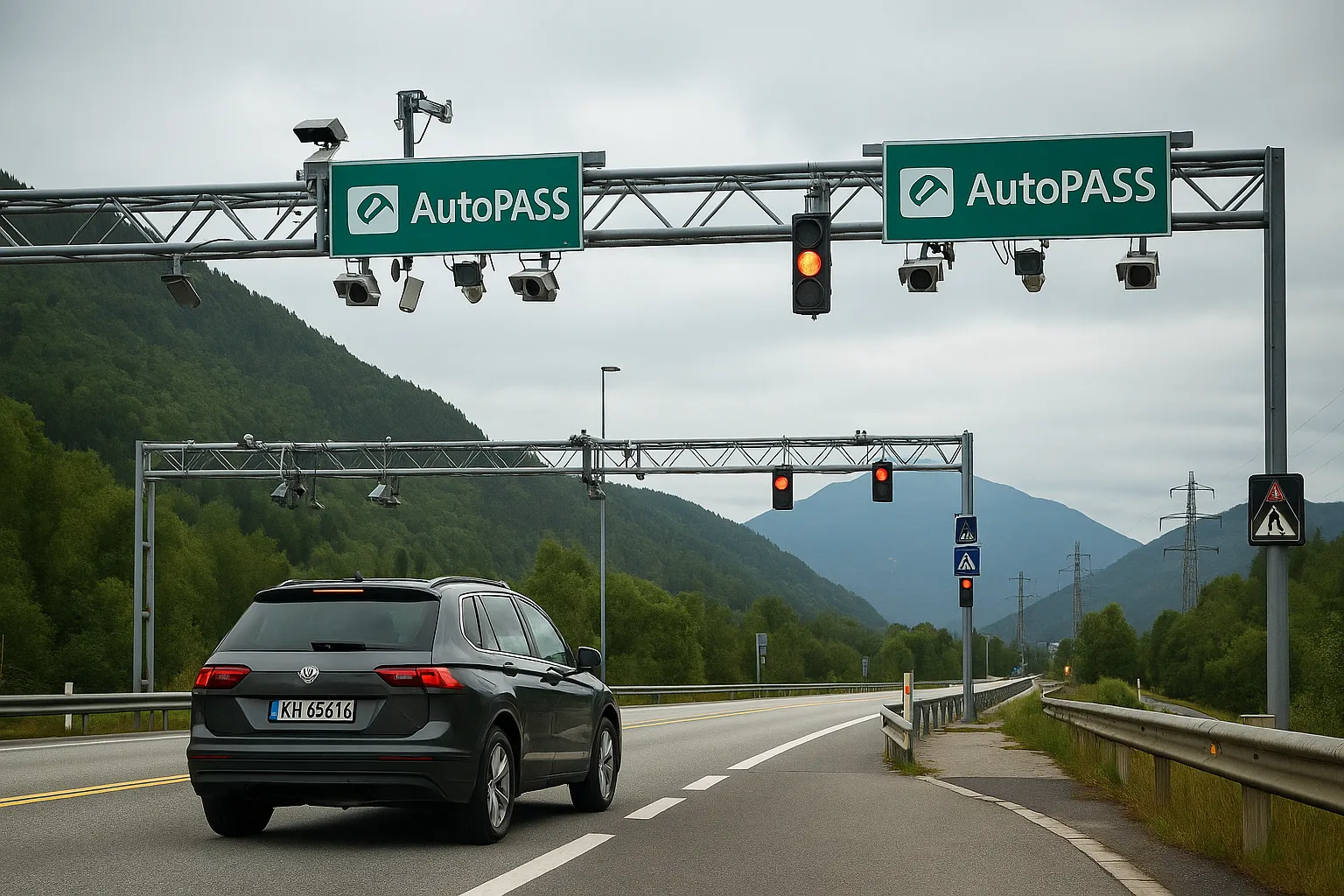
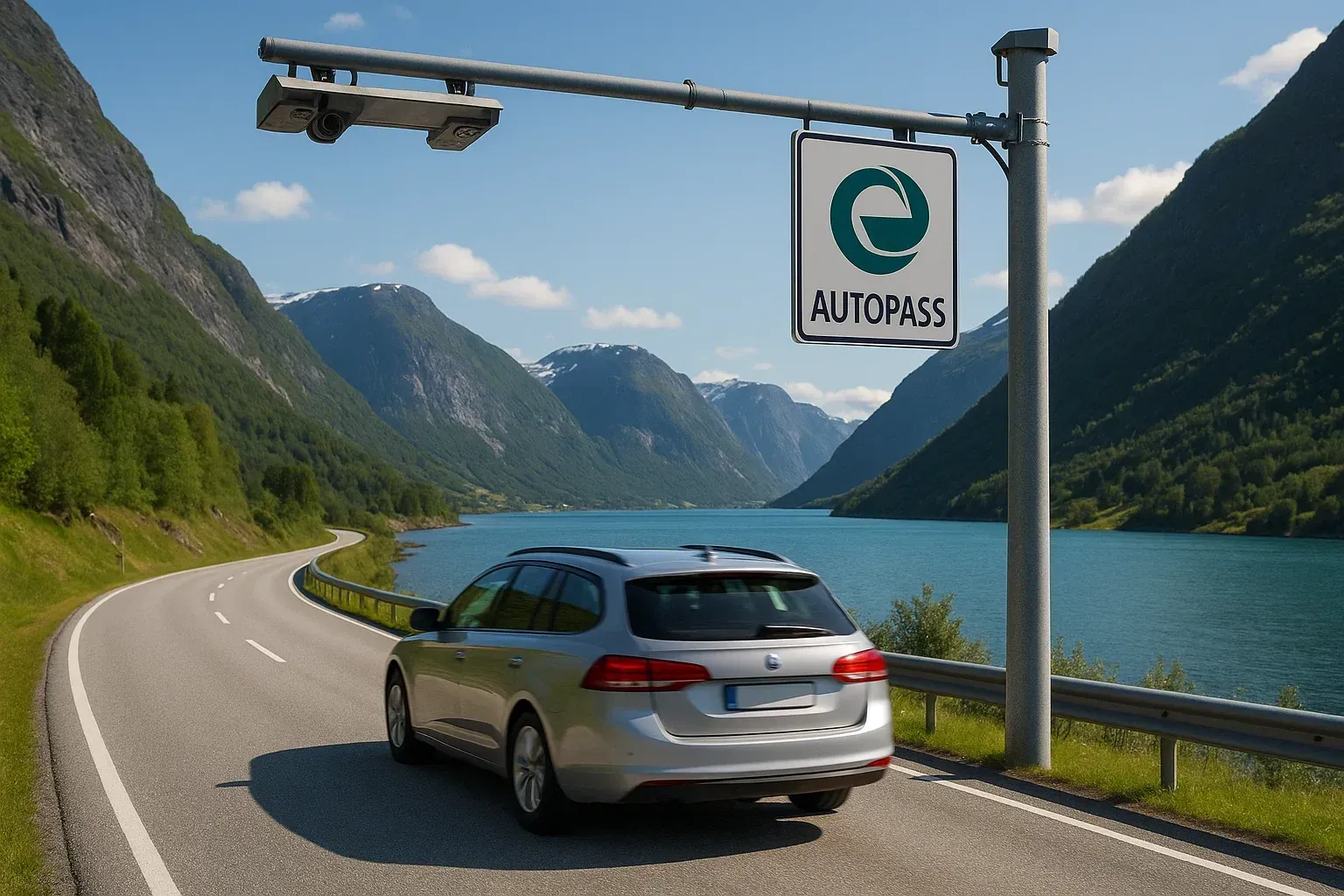
AutoPASS is Norway’s automated system for collecting road tolls and ferry fares. It is owned and operated by the Norwegian Public Roads Administration (Statens vegvesen). When you drive through a toll station, a camera reads your number plate or the tag on your windscreen, and the crossing is registered. You do not stop and you do not pay on the spot.
You get a tag and agreement from a toll service provider: Flyt, AutoSync, SkyttelPASS, ØresundPAY or Tolltickets. BroBizz only serves business customers in Norway, and Ayvens only vehicles it leases. Only toll service providers can sign and manage user agreements, so questions about your agreement and tag go to your provider.
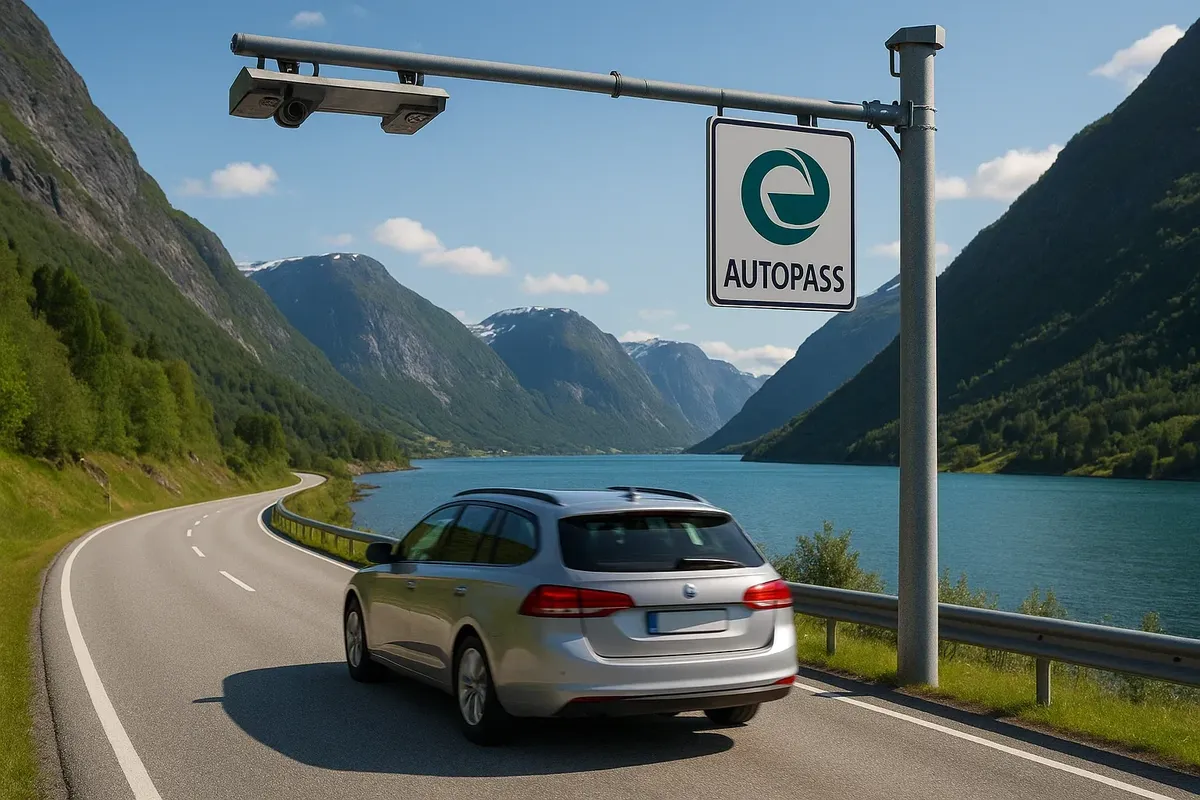
Do I need an AutoPASS tag?
Usually not. For private cars and motorhomes used only privately, the tag is optional. It is compulsory for vehicles over 3,500 kg registered to a business, the state, a county or a municipality, or used for business purposes. If the tag is linked to a different registration number, you can be fined at an inspection.
Why get a tag anyway? With a valid agreement and tag you get 20 % off at most toll stations and 10 % off on ferries. For short visits in a foreign-registered car, Epass24 is the simpler option without a tag.
New car? The agreement and tag belong to the vehicle. If you change cars, tell your toll service provider.
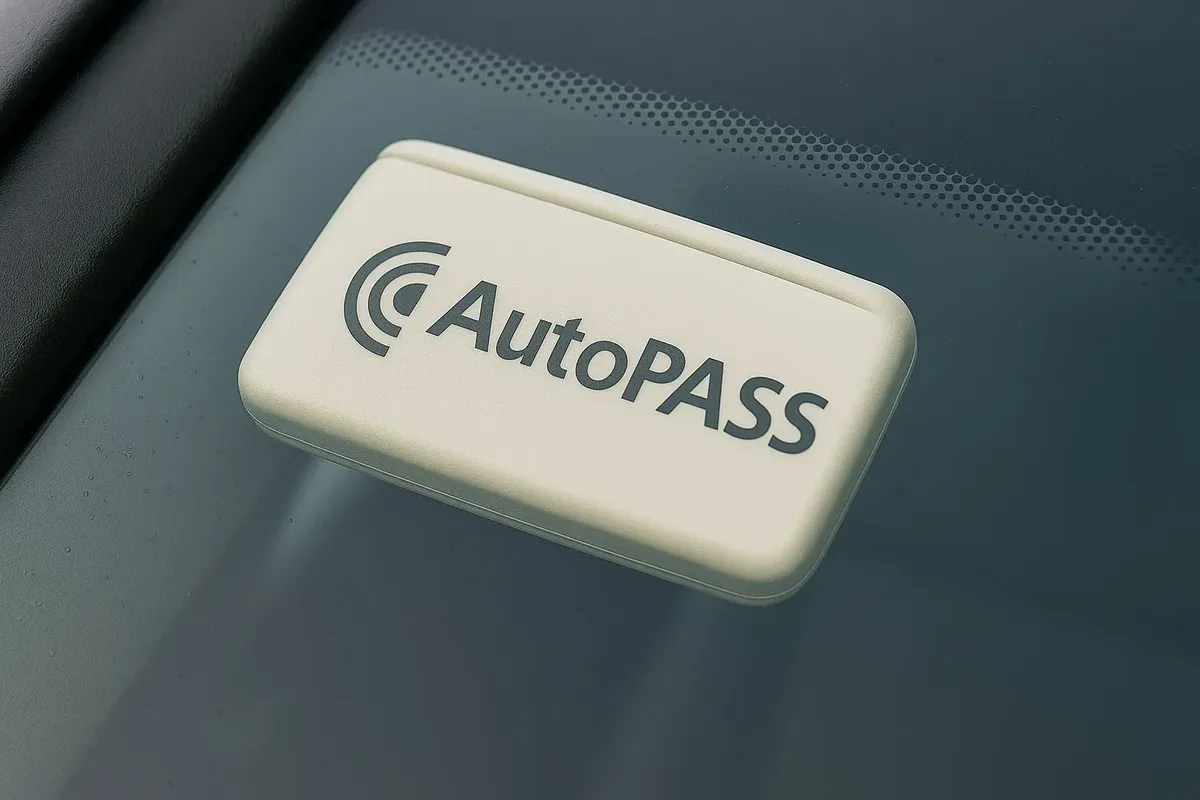
How do I pay tolls without a tag?
You do not need to do anything in advance. Most toll stations are automatic: the camera photographs the number plate, and the company that owns the toll station sends an invoice by post to the vehicle’s owner. For a Norwegian car without an agreement you pay the regular rate, with no penalty charge.
For foreign-registered cars, the owner is looked up in the vehicle register of their home country, and a lookup fee is added. You avoid it with Epass24 or an AutoPASS agreement – see foreign-registered cars.
Watch out for scams: AutoPASS for ferries warns about fake emails and text messages asking you to update your card. Only pay through links you typed in yourself.
How much are tolls in Norway?
The price depends on the toll station, the vehicle, the fuel type and the time of day. Rate group 1 covers vehicles up to 3,500 kg and all passenger cars. In Oslo, Bergen and Kristiansand the rates depend on fuel type. Examples per crossing in 2026, without an agreement:
| Rate group 1 | Oslo | Oslo, rush hour | Bergen | Bergen, rush hour |
|---|---|---|---|---|
| Electric car | NOK 21 | NOK 26 | NOK 22 | NOK 44 |
| Petrol and plug-in hybrid | NOK 38 | NOK 47 | NOK 32 | NOK 64 |
| Diesel | NOK 42 | NOK 50 | NOK 38 | NOK 70 |
With an AutoPASS agreement you get 20 % off. In Bergen, for example, you then pay NOK 25.60 in a petrol car and NOK 17.60 in an electric car outside rush hour. Sources: Fjellinjen and Ferde, rates from 01.01.2026 (electric cars in Bergen from 25.03.2026), checked 26.09.2026.
- Oslo: rush hour 06:30–09:00 and 15:00–17:00. Rush-hour rates do not apply on Saturdays, Sundays, public holidays or in July. One-hour rule: you pay for one crossing per hour on the Inner Ring and the Oslo Ring, and for one per hour on the city border.
- Bergen: rush hour Monday–Friday 06:30–09:00 and 14:30–16:30. One-hour rule: crossings within 60 minutes count as one, and you pay the highest. With an agreement you pay for at most 60 crossings per calendar month.
Other toll stations, bridges and tunnels have their own rates, published by the toll company that owns them.
What do tolls pay for?
Toll money mainly funds road construction. Under section 27 of the Roads Act and political decisions, it can also be used for rail-based public transport, cycle paths and running public transport. Each toll project is finally approved by the Storting, the Norwegian parliament (Store norske leksikon, Gisle Solvoll, updated 27.07.2026).
Rental cars: how are tolls and ferries paid?
Rental cars in Norway often have an AutoPASS tag. Crossings are registered on the car, and the rental company charges you after you return it. At one of the large rental companies, for example, you pay the regular rate per crossing plus an administration fee of NOK 40 per day, up to 5 days (checked 26.09.2026). Car rental companies in your city are listed in the table below. The receipt arrives about 14 days after you return the car. Do not remove or move the tag – that can cost extra.
Terms differ between companies. Ask when you collect the car: Does it have a tag? What fee is added? Does the tag also work on ferries?
Foreign-registered car: Epass24 or invoice?
You have three options:
- An agreement with a tag from a toll service provider: 20 % off each crossing, plus other discounts based on the car’s environmental data.
- Registration with Epass24 without a tag: no discount, but you get the correct environmental rate in cities. The account is free. You add a Visa or Mastercard, and the card is charged automatically at the end of each month for the previous month’s crossings. Epass24 covers tolls, congestion taxes and ferries in Norway and Sweden, for your own and rented foreign-registered vehicles.
- Invoice: the owner is looked up in the vehicle register of their home country, and a lookup fee is added.
| Country | Lookup fee from 01.05.2025 |
|---|---|
| Germany | EUR 5.10 |
| Spain | EUR 8.67 |
| Austria | EUR 14.00 |
| Poland | PLN 47.40 |
Sources: autopass.no (foreign vehicles) and epass24.com, checked 26.09.2026. Epass24 is operated by ParkTrade Europe AB.
Electric cars: renting, charging, and toll and ferry discounts
Renting an EV: You can rent an electric car from most rental companies in Norway (Visit Norway). Register with the major charging providers before your trip – there are about ten of them (Visit Norway). Ask when you pick up the car: does it come with a charging tag or card, how is charging billed, and how much charge should it have when you return it?
Tolls: Zero-emission vehicles get a 30–100 % discount, depending on the toll project. Where rates depend on fuel type, the electric-car rate applies even without an agreement, and a tag and agreement give you another 20 % off. In Oslo an electric car pays NOK 21 (NOK 26 in rush hour), a petrol car NOK 38 (NOK 47).
Ferries: On national road ferries, zero-emission vehicles up to 6 metres pay at most 70 % of the fare for a comparable conventional car, and longer zero-emission vehicles at most 50 % (from 01.03.2024). Counties may keep 50 % on their ferries. Source: Ministry of Transport, circular N-2/2023.
Charging: According to Visit Norway there are more than 17,000 charging stations and 3,300 rapid chargers in Norway. Find them on the map at ladestasjoner.no and in the charging companies’ apps. Around 60 % of fast chargers accept bank cards (Norwegian EV Association, updated 17.09.2026); otherwise you register in the operator’s app.
Fast-charging prices vary between companies and may change. At one of the large charging operators, fast charging costs for example NOK 6.79/kWh without membership and NOK 6.49/kWh for members (checked 26.09.2026).
Charging in Oslo: see petrol and charging stations in Oslo in our directory.
Video: a rented EV in the mountains (Visit Norway, 6:20)
Ferries: how do you pay, and what does it cost?
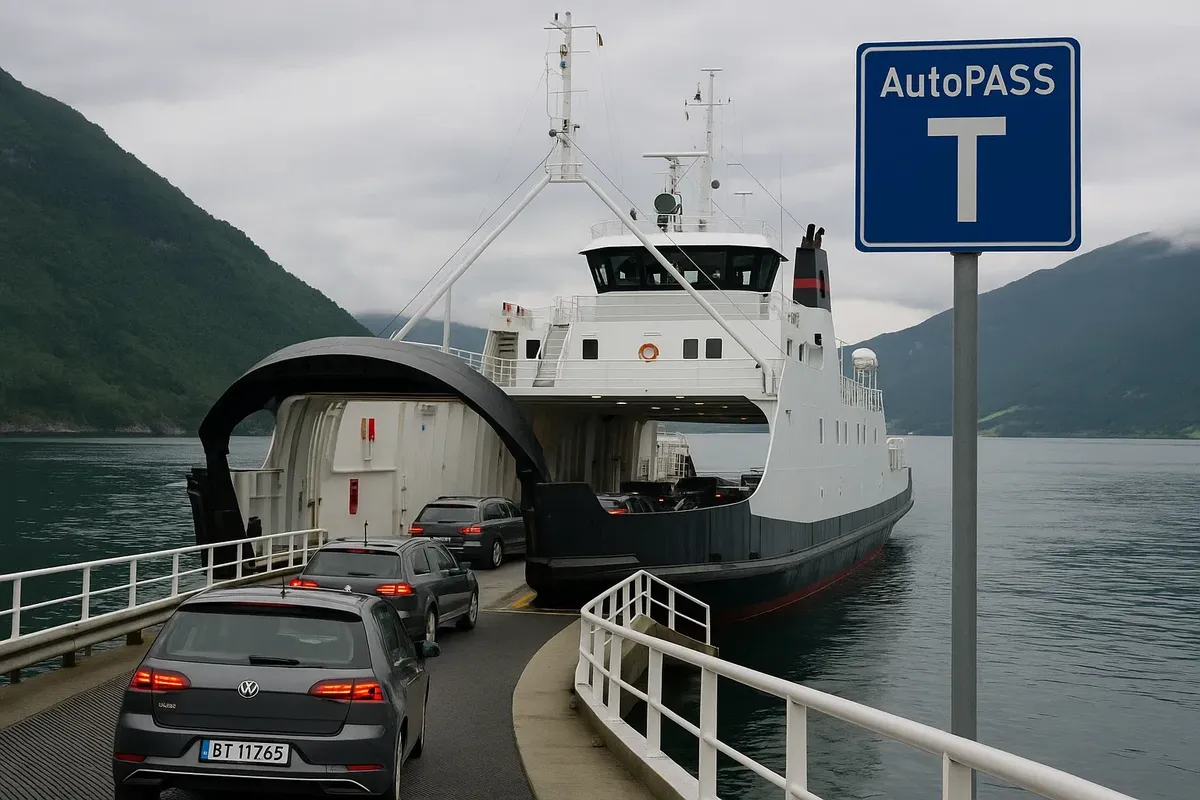
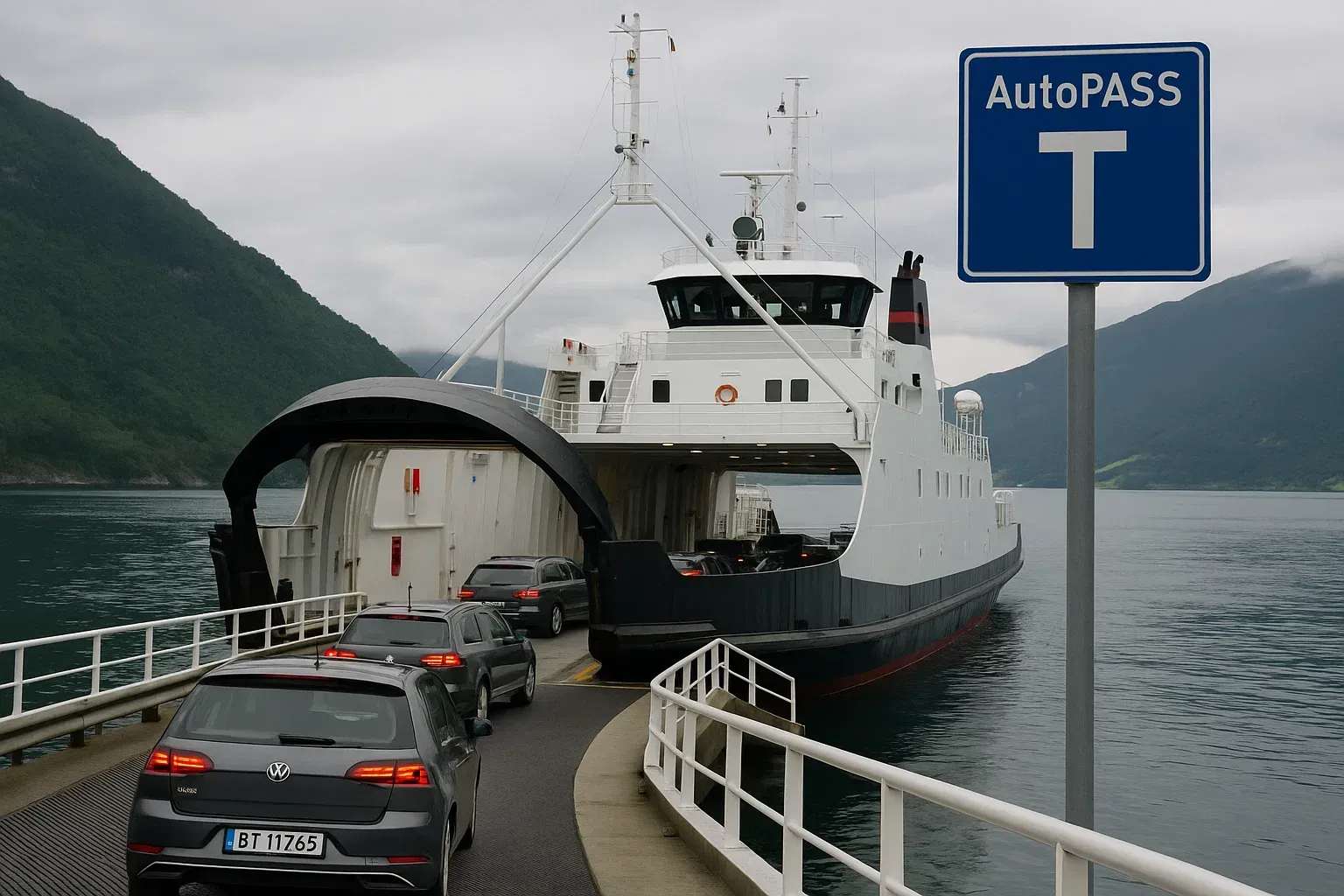
With an AutoPASS tag and agreement you can pay on most ferries in Norway. Your options (AutoPASS for ferries, checked 26.09.2026):
- Tag without prepayment: 10 % off.
- Prepayment agreement: 40–50 % off. The 2026 prepayment is NOK 2,200 for vehicles from 0 to 8 metres.
- FerryPay: your card is charged automatically – no invoice and no invoice fee, but no discount either.
- Card on board: pay the crew by card and avoid the invoice fee.
- Invoice: if you use none of these, the vehicle’s owner gets an invoice by post with a NOK 35 fee.
The fare itself depends on the route and the length of your vehicle – check the ferry company’s page for your crossing. Some routes are free (Visit Norway). More tips: how to cross fjords without overpaying.
Can I drive in Norway with a foreign driving licence?
- EU/EEA: yes, for as long as the licence is valid. Licences from the UK and Switzerland have the same rights. You must meet Norwegian health requirements.
- Outside the EU/EEA (for example the USA, Canada, Australia): normally for 3 months from your arrival in Norway. With a residence permit and an employment contract in Norway for more than 3 months, up to 6 months. If you live here, 3 months from your registration in the National Population Register. Japanese licences: category B for 1 year.
- International driving permit: you need one if your licence has no photo, is written in a non-Latin alphabet (such as Arabic, Cyrillic or Japanese), or uses categories other than the international ones. A certified translation is also accepted.
- Exchanging for a Norwegian licence from countries such as the USA, Canada, Australia, Israel, Monaco, New Zealand, San Marino and South Korea: there is no deadline after you move here, but you must pass a theory test and a practical driving test. You have two years after your application is granted.
Source: Statens vegvesen, checked 26.09.2026. More on the rules: can you drive in Norway with a national licence?
How old do you have to be to rent a car?
The minimum age for a category B licence in Norway is 18 (Statens vegvesen). The minimum age for renting is set by each rental company and is stated in the rental terms, together with any extra charges. Some companies require you to have held your licence for at least one year (Visit Norway).
Which traffic rules should visitors know?
- Speed: 80 km/h outside built-up areas unless signed otherwise, up to 110 km/h on some motorways, 50 km/h in built-up areas and as low as 30 km/h in residential areas. Heavy vehicles and cars towing a caravan: 80 km/h at most.
- Headlights: dipped headlights must be on at all times, even in the middle of summer.
- Tyres: studded tyres are allowed from 1 November until the first Sunday after Easter, in Northern Norway from 15 October to 1 May. Summer tyres need a tread depth of at least 1.6 mm.
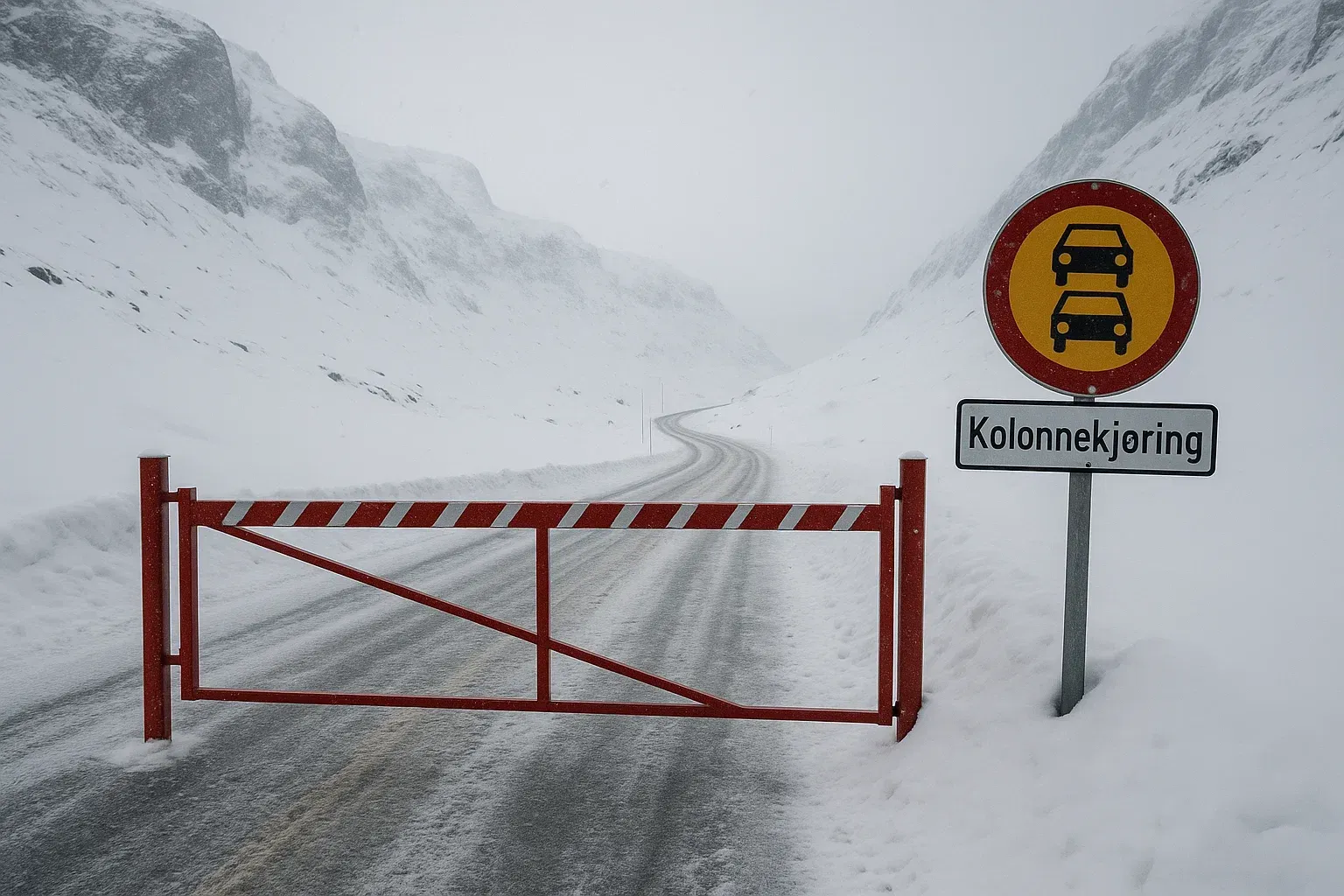
- Winter: Visit Norway recommends winter driving only for drivers with experience of snow and ice. Check the weather and road reports before you set off.
Source: Visit Norway, checked 26.09.2026. Also read driving rules for visitors and the winter driving checklist.
Video: winter driving in Norway (Visit Norway, 1:26)
Petrol and diesel: how much, and where to fill up?
Pump prices vary between stations and can change during the day, so we do not quote a single price here. Check the price board at the station or the chain’s app. Visit Norway notes that fuel is expensive in Norway and that stations can be far apart in rural areas – fill up before you cross the mountains.
Petrol and charging stations in our directory: Oslo, Bergen, Trondheim, Stavanger.
Norwegian driving licence: how much does it cost and how long does it take?
The path to a category B licence (Statens vegvesen):
- Basic traffic course, 17 hours. You can take it from age 15; if you are 25 or older, you are exempt.
- Step 2 – basic training, with a mandatory assessment lesson at the end.
- Step 3 – with a mandatory safety course on a practice range, 4 hours.
- Step 4 – with a mandatory safety course on the road, 13 hours.
- Theory test (can be taken 6 months before you turn 18) and a practical test with 55–60 minutes of driving.
| Statens vegvesen fee from 01.02.2026 | Price |
|---|---|
| Theory test | NOK 480 |
| Practical test, category B | NOK 1,490 (paid online), NOK 1,540 (at the traffic station) |
| Issuing the licence | NOK 160 (online), NOK 270 (at the traffic station) |
| New photo | NOK 100 |
Driving lessons and courses at a driving school come on top, and prices vary. How long it takes depends on how much you practise and when you get a test slot. Driving schools in our directory: Oslo, Bergen, Trondheim, Stavanger, Tromsø, Kristiansand.
Find car rental, charging, parking and driving schools in your city
| City | Car rental | Petrol and charging | Parking | Driving schools |
|---|---|---|---|---|
| Oslo | Car rental | Stations | Parking | Driving schools |
| Bergen | Car rental | Stations | Parking | Driving schools |
| Trondheim | Car rental | Stations | Parking | Driving schools |
| Stavanger | Car rental | Stations | Parking | Driving schools |
| Tromsø | Car rental | Stations | Parking | Driving schools |
| Kristiansand | Car rental | Stations | Parking | Driving schools |
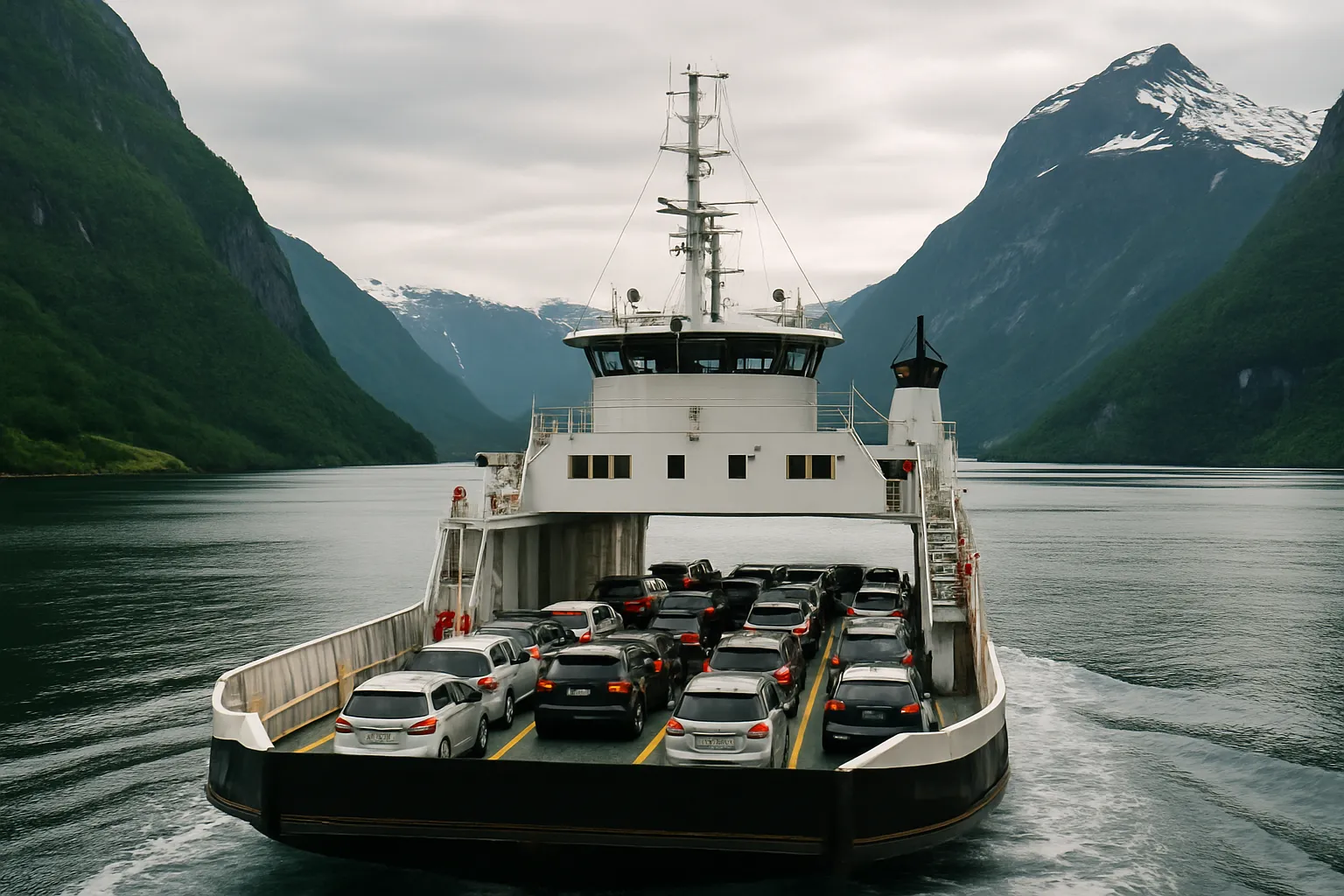
Photos: toll station, tag and ferry


People also ask
- What is AutoPASS, and who runs it?
- Where do I get an AutoPASS tag?
- Do I need AutoPASS in Norway?
- AutoPASS tag and a new car – what do I do?
- How do I pay tolls in Norway without a tag?
- How are tolls paid in Norway?
- How much are tolls in Oslo?
- How much are tolls in Bergen?
- When is rush hour at the toll ring?
- How does the one-hour rule work?
- What do tolls in Norway pay for?
- How do I pay tolls in a rental car?
- AutoPASS and rental cars – who pays?
- How do foreign cars pay tolls in Norway?
- What is Epass24?
- Can I rent an electric car in Norway?
- Do electric cars pay tolls in Norway?
- Is charging an electric car free in Norway?
- How much does it cost to charge an EV in Norway?
- How do I pay for ferries in Norway?
- How much discount does a ferry prepayment give?
- Can I drive in Norway with a US licence?
- Can I drive in Norway with a UK licence?
- Do I need an international driving permit in Norway?
- What is the minimum age to rent a car in Norway?
- What is the speed limit in Norway?
- What should I know about driving in Norway in winter?
- What is the petrol price in Norway today?
- How much does a Norwegian driving licence cost?
Frequently asked questions about AutoPASS and tolls
No. Most toll stations are automatic. Without an agreement, the owner of a Norwegian car gets an invoice at the regular rate with no penalty charge. If you drive a foreign-registered car, it pays to register it free of charge with Epass24 – otherwise a lookup fee is added to the invoice.
No, not in a private car or a motorhome used privately: you get an invoice at the regular rate. A tag is only compulsory for vehicles over 3,500 kg used for business.
With a valid agreement and tag you get 20 % off at most toll stations and 10 % off on ferries. In Bergen a petrol car then pays NOK 25.60 instead of NOK 32 outside rush hour (Ferde, 2026).
Yes, at most toll stations, but with a 30–100 % discount depending on the project. In Oslo a crossing costs NOK 21 for an electric car (NOK 26 in rush hour) without an agreement, in Bergen NOK 22 (NOK 44 in rush hour).
Most toll stations are automatic. You pay with a tag and agreement, through Epass24 (foreign-registered cars) or by invoice afterwards.
Rental cars often have an AutoPASS tag, and the rental company charges you after the rental. At one of the large rental companies, for example, you pay the regular rate per crossing plus a NOK 40 administration fee per day, up to 5 days (checked 26.09.2026). Ask about the terms when you collect the car.
Yes, on most ferries in Norway. The tag gives 10 % off, and a prepayment agreement 40–50 %. Without a tag you can use FerryPay, pay by card on board or get an invoice with a NOK 35 fee.
Normally for 3 months from your arrival in Norway. Licences from the EU/EEA, the UK and Switzerland can be used for as long as they are valid.
Only if your licence has no photo, is written in a non-Latin alphabet or uses categories other than the international ones. A certified translation is also accepted.
From 1 February 2026: theory test NOK 480, practical test for category B NOK 1,490 paid online or NOK 1,540 at the traffic station, issuing the licence NOK 160 online. Driving lessons at a driving school come on top.
Yes, most rental companies offer electric cars (Visit Norway). Register with the major charging providers before your trip, and ask the rental company about a charging tag and how charging is billed.
Mainly road construction. Under section 27 of the Roads Act, toll money can also go to rail-based public transport, cycle paths and running public transport. Each project is approved by the Storting (Store norske leksikon, 2026).
On the map at ladestasjoner.no and in the charging companies’ apps. About 60 % of fast chargers accept bank cards. Our directory lists petrol and charging stations in Oslo, Bergen, Trondheim and other cities.
In Oslo, rush-hour rates do not apply on Saturdays, Sundays, public holidays or in July. In Bergen, rush hour is Monday–Friday 06:30–09:00 and 14:30–16:30.
Each rental company sets its own minimum age. The minimum age for a category B licence is 18, and some companies require you to have held your licence for at least one year.
Sources
All links checked 26.09.2026.
- AutoPASS: foreign vehicles
- AutoPASS: rates and discounts
- AutoPASS: payment without an agreement
- AutoPASS: compulsory tag
- AutoPASS: toll service providers
- AutoPASS for ferries: payment and discounts
- AutoPASS for ferries: prices and prepayment 2026
- Epass24
- Fjellinjen: tariffs and toll stations in Oslo, 2026
- Ferde: Bypakke Bergen, rates 2026
- Ministry of Transport: circular N-2/2023, zero-emission vehicles on ferries
- Statens vegvesen: using a non-EU/EEA driving licence in Norway
- Statens vegvesen: using an EU/EEA driving licence in Norway
- Statens vegvesen: exchanging licences from the USA, Canada, Australia and others
- Statens vegvesen: passenger car licence (category B)
- Statens vegvesen: fees for tests and licences
- Visit Norway: getting around by car
- Visit Norway: electric cars in Norway
- Store norske leksikon: bompenger (Gisle Solvoll, updated 27.07.2026)
- Norwegian EV Association: fast-charging prices
- Circle K: charging prices
- Avis: tolls with a rental car
Readers’ experiences
Have you driven through Norwegian toll stations in a rental car or your own car? Tell us what happened – invoices, fees, ferries – in the comments at the bottom of the page. We use your questions when we update this guide.




2 comments
Log in to leave a comment